


Fake Patek Philippe vs Real — Every Detail Experts Check First
Apr
Fake Patek Philippe vs Real — Every Detail Experts Check First
Authentication Guide • 8 Sections • Updated 2026
Quick Navigation
This is not a guide to discourage replica ownership. It is a reference for understanding exactly what separates a genuine Patek Philippe from the best fakes — whether you are buying pre-owned and need to verify authenticity, or you own a replica and want to know what an expert would notice. If you want to check your watch yourself, see the step-by-step authentication guide.
The Weight Test — First Thing Experts Do
Pick up a genuine Patek Philippe Nautilus 5711/1A in one hand and a cheap fake in the other. The difference hits you before you even look at them. A genuine 5711 weighs approximately 115g on the bracelet — the stainless steel alloy Patek uses (316L with proprietary treatment) has specific density that budget replicas cannot match.
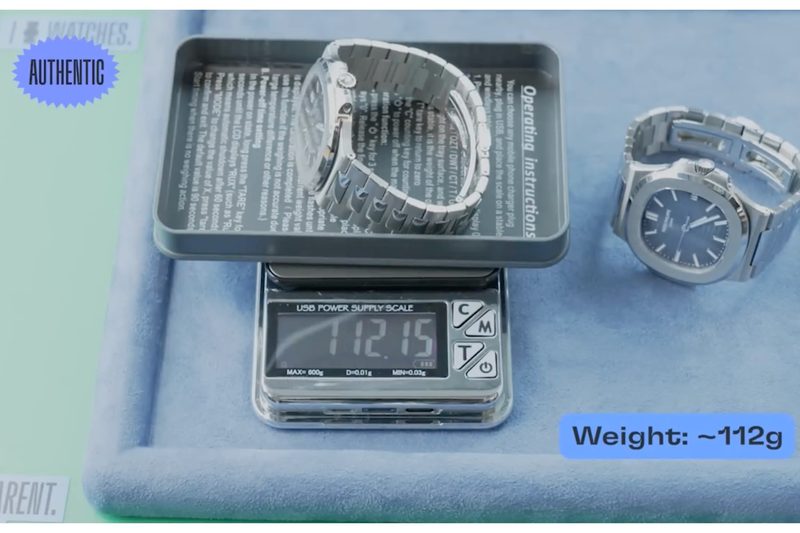
Superclone replicas from factories like PPF and 3K have closed this gap significantly. Their 316L steel is sourced from the same Chinese mills that supply genuine watch manufacturers. The weight difference between a 3K Nautilus and the genuine sits around 3-5 grams — imperceptible on the wrist. Budget fakes, however, often use 304L stainless or even alloy cores with steel plating. These weigh 15-20g less and feel hollow.
Key Point: Gold models are the easiest tells. A genuine 18K yellow gold Nautilus weighs almost 60g more than a gold-plated replica. No amount of plating changes mass. If someone offers you a “gold Patek” that feels light — walk away.
Dial Printing and Texture — Where Fakes Fall Apart
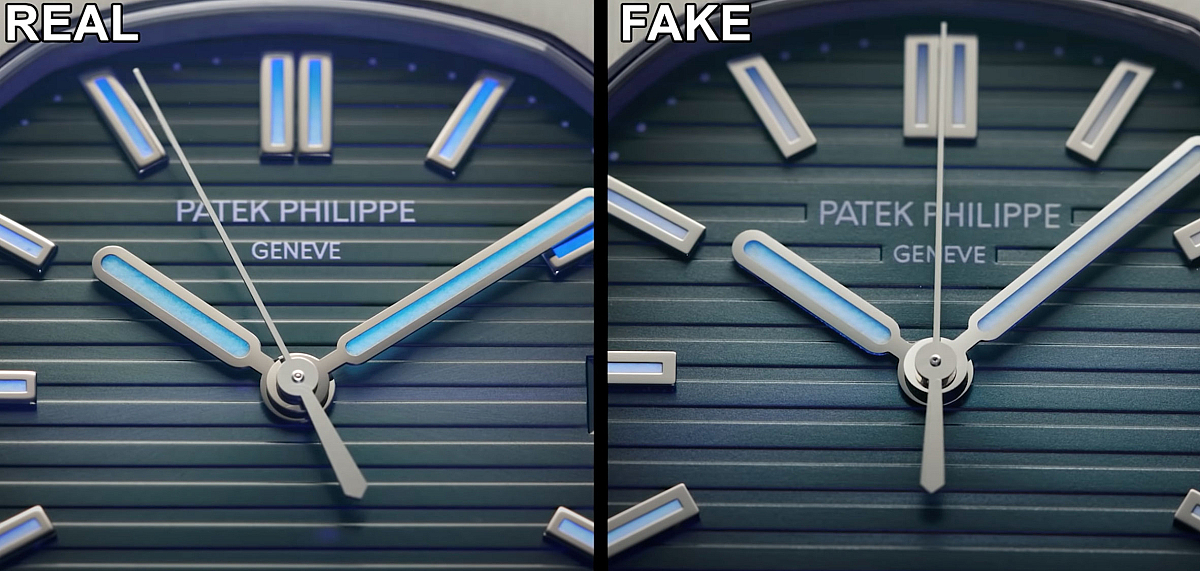
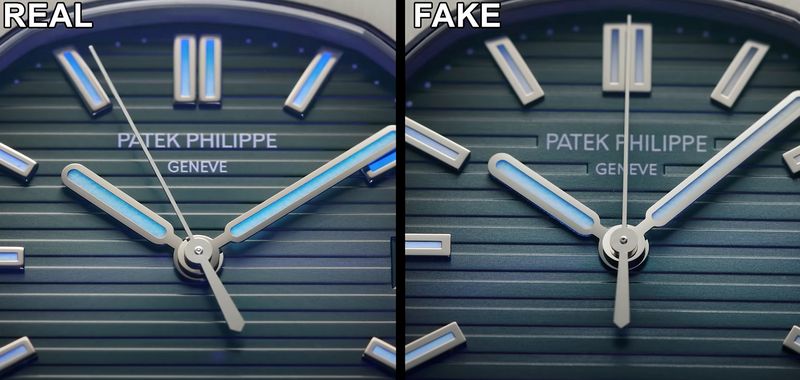
Patek Philippe applies dial text using a multi-layer pad printing process. Each letter of “PATEK PHILIPPE” and “GENEVE” receives 4-6 passes of white lacquer, building up a micro-relief you can feel with a fingernail under 10x magnification. The “Calatrava cross” logo above 6 o’clock is printed, not stamped — but it appears three-dimensional because of the paint depth.
Tip: Always check the rehaut engraving under strong light — genuine Patek Philippe pieces have laser-etched serial numbers at the 6 o’clock position that replicas often skip or misalign.
On a fake Patek Philippe, dial printing is the most common failure point. Budget fakes use single-pass pad printing — the text looks flat, thin, and slightly blurry at the edges. Under magnification, you may see bleeding where ink spread beyond the intended letterform. The “GENEVE” text below the Calatrava cross is particularly diagnostic: genuine pieces have perfectly even letter spacing at 0.3mm gaps. Fakes frequently compress or stretch this spacing.
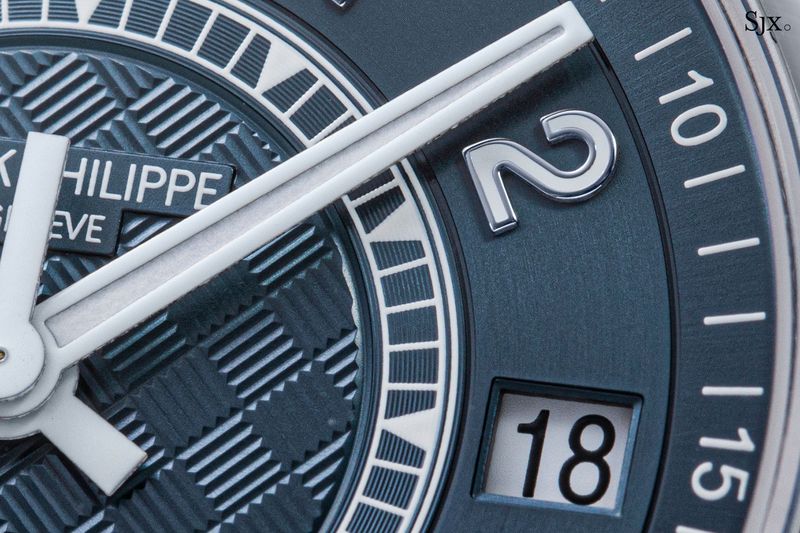
The horizontal embossing on the Nautilus dial is another key checkpoint. Genuine Nautilus dials have lines cut at precisely 0.2mm depth with sharp peaks and consistent spacing across the entire surface. The sunburst finishing sits underneath these lines. Replicas from PPF V4 and 3K V2 have improved significantly — their embossing depth is within 0.05mm of genuine. But hold the dial at a 45-degree angle under strong light: genuine dials show a more complex color shift (the blue travels from near-black to bright cobalt), while most replicas have a narrower gradient range.
Genuine Dial Tells
- Multi-layer pad printing with micro-relief
- Sharp text edges at 10x magnification
- Even letter spacing (0.3mm gaps)
- Deep embossing (0.2mm) on Nautilus
- Wide color shift range in sunburst
- Applied indices with polished bevels
Fake Dial Tells
- Single-pass printing, flat text
- Ink bleeding at letter edges
- Uneven GENEVE spacing
- Shallow embossing on Nautilus
- Narrow color range, flat blue tone
- Indices with rough edges or bubbles
Caseback and Engravings — The Hidden Story
Patek Philippe uses two caseback types across its collections. Solid casebacks (Calatrava, older Nautilus) carry engraved text — “PATEK PHILIPPE GENEVE,” the reference number, case material code, and a unique serial number. Transparent casebacks (modern Nautilus, Aquanaut) show the decorated movement behind a sapphire crystal engraved with the Patek Philippe seal.
On solid casebacks, the genuine engraving sits 0.08-0.12mm deep — cut with a CNC mill, then hand-finished. Run your fingernail across it: you should feel a clean channel with no rough edges. Fake Patek Philippe casebacks often use laser engraving, which creates a shallower mark (0.03-0.05mm) with slightly raised edges from the heat. Under a loupe, laser engraving shows tiny dots rather than smooth cut lines.
On transparent casebacks, check the Patek Philippe seal engraving on the sapphire crystal itself. Genuine pieces use deep acid-etching that creates a frosted appearance in the logo area while the rest of the crystal remains optically clear. Budget replicas often print or laser this seal — it looks slightly grey or reflective rather than frosted. Hold the caseback at an angle under natural light: genuine frosted engraving scatters light diffusely, while printed or lasered versions show a shinier reflection.
Insight: The case serial number is unique to each genuine Patek. However, replica factories commonly reuse a handful of serial numbers across thousands of watches. If you see the same serial across multiple “genuine” listings online — at least one (probably all) is fake.
Movement — Where Fake Patek Philippe vs Real Is Decided
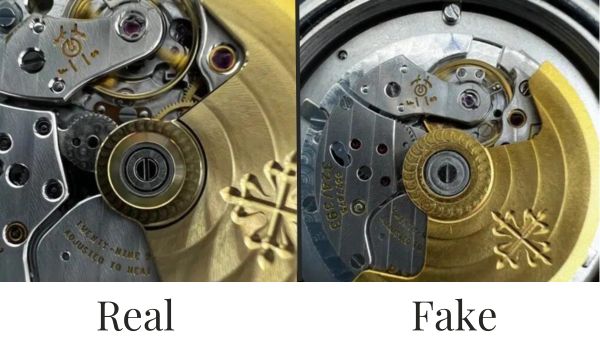
The movement is the single most reliable indicator when comparing a fake Patek Philippe vs real. Patek Philippe is one of only a handful of manufacturers that finishes every component of every movement to the highest possible standard — including surfaces you never see during normal wear.
Insight: The weight difference between a genuine 5711 and a low-tier fake can reach 30 grams. A quality superclone, however, matches the original within 2-3 grams — making weight alone an unreliable test.
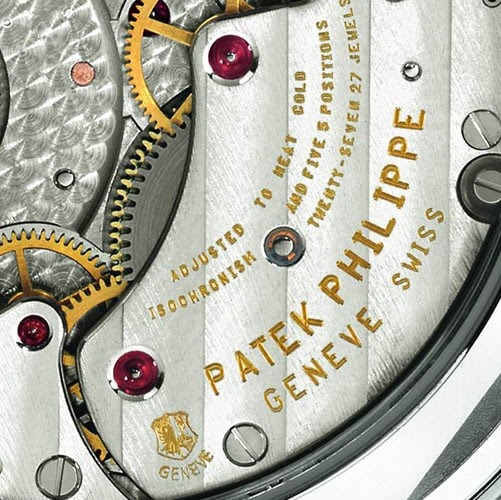
Genuine Patek movements carry the Patek Philippe Seal (replaced the Geneva Seal in 2009), which guarantees accuracy of -3/+2 seconds per day, specific decorative finishing standards, and reliable function. Every bridge shows hand-applied Geneva stripes with consistent depth and spacing. Every steel part is anglaged (beveled) and mirror-polished by hand. The Gyromax balance wheel uses adjustable gold weights rather than traditional screws.
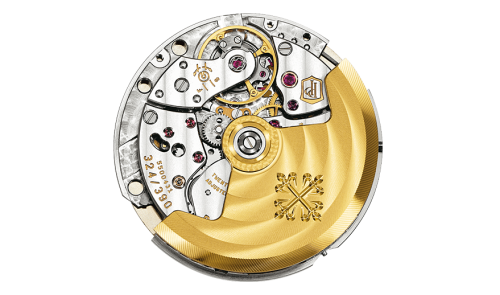
For a full breakdown of every clone caliber and what to expect from each, read the clone movement guide. The key takeaway: the movement is where genuine Patek Philippe craftsmanship is hardest to replicate — and where trained eyes spot the difference fastest.
Case Finishing and Edge Transitions
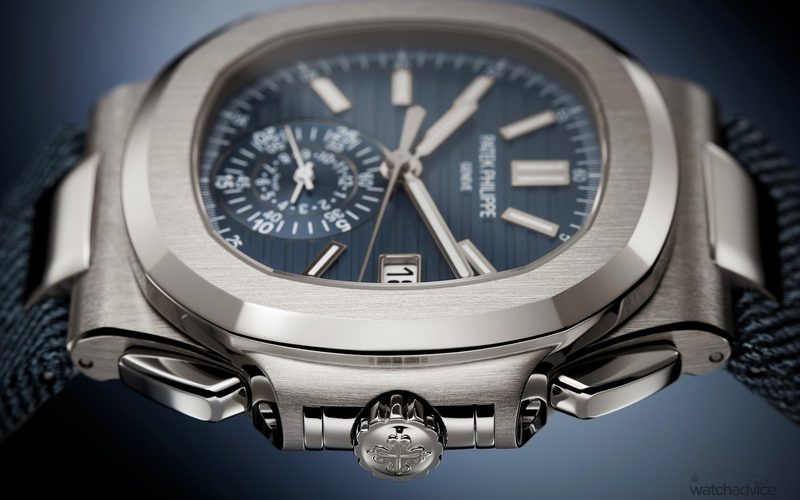
Patek Philippe cases follow a strict finishing hierarchy: every surface is either mirror-polished, satin-brushed, or a combination — and the transitions between these finishes are razor-sharp. On a genuine Nautilus, the bezel top is mirror-polished while the sides are satin-brushed. The line where polish meets satin is so precise it looks like a machined edge. This is achieved through multiple hand-finishing steps after CNC machining.
Top replica factories (PPF, 3K, ZF) have significantly improved their case finishing. The transitions exist, and under normal viewing they look correct. The difference emerges under 5x magnification or in direct sunlight: genuine transitions are clean lines with zero overlap, while replica transitions show a 0.1-0.2mm “feathering” zone where one finish bleeds into the other. The Nautilus “ears” (the protruding flanks on each side of the case) are another diagnostic area — genuine ears have perfectly symmetrical satin brushing that runs parallel to the case edge. Replicas occasionally show slight brushing angle variations between left and right ears.
Expert Check: Flip the watch over and examine the area between the lugs (where the bracelet or strap connects). On genuine Patek, this hidden surface is finished to the same standard as the visible case. On most replicas, including superclones, this area shows rougher tooling marks or less consistent brushing. It is the last place factories invest finishing time — and the first place experts look.
Lume and Crystal — Quick Visual Tests
Patek Philippe uses Super-LumiNova on the Nautilus and Aquanaut — green glow on the hands and hour markers. Charge the watch under a bright light for 30 seconds, then take it into a dark room. Genuine Patek lume glows evenly across all markers with consistent intensity. Budget fakes show uneven lume — some markers brighter, others dim, and the hands may glow a different shade of green than the indices.
The sapphire crystal on genuine Patek Philippe has anti-reflective coating on both sides — what the industry calls “double AR coating.” This makes the dial appear to float without any visible reflection when viewed straight on. Cheaper replicas use single-side AR or no coating at all. You can test this by tilting the watch under a bright light: genuine double AR shows a very faint purple or blue tint on reflections, while uncoated or single-coated crystals produce strong white reflections that obscure the dial.
Lume longevity is another differentiator. Genuine Patek Super-LumiNova remains visible for 6-8 hours after a full charge. Most replica lume fades after 2-3 hours. This is not something you test in a store, but after a few nights of ownership, the difference becomes clear.
Tip: The crystal edge is also diagnostic. Genuine Patek crystals have a perfectly polished edge with no visible glue line between crystal and case. Budget fakes sometimes show a thin gap or adhesive residue around the crystal perimeter. Use a 5x loupe and examine the crystal-to-case junction all the way around.
Serial Numbers, Papers, and the Certificate
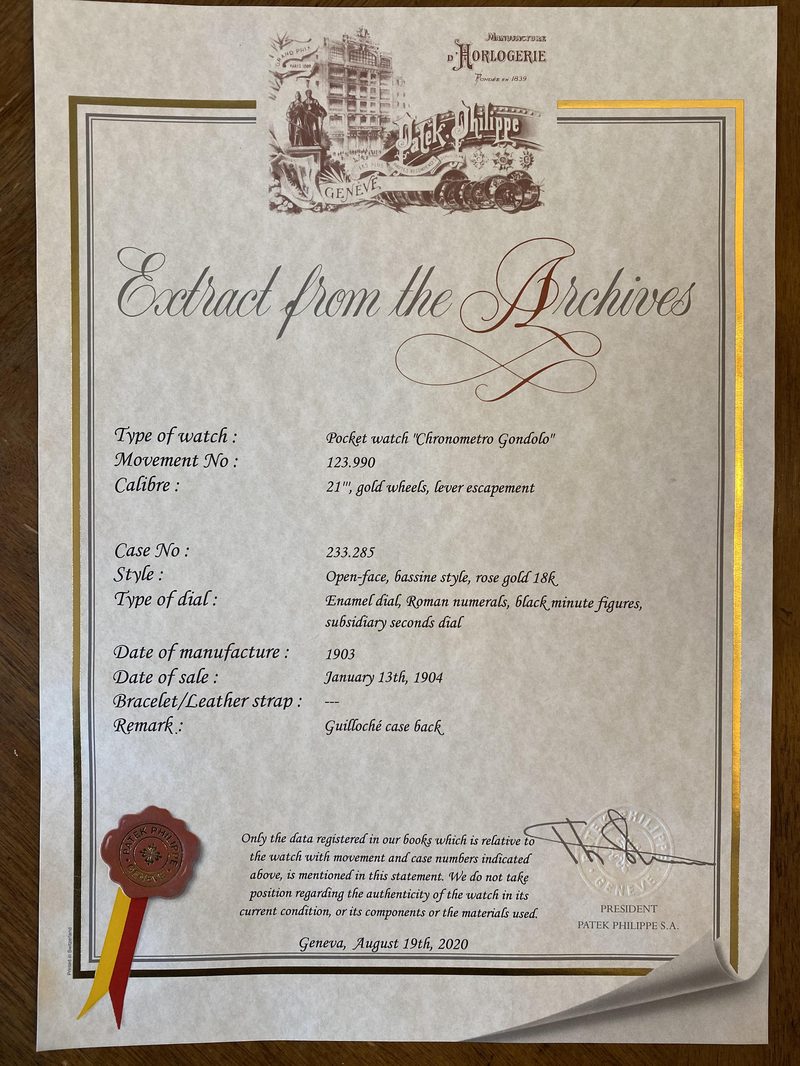
Every genuine Patek Philippe carries two unique numbers: a case number (engraved on the caseback or between the lugs) and a movement number (visible on the movement itself). These numbers are recorded in Patek Philippe’s archive in Geneva. You can write to Patek directly — or have an authorized dealer query the archive — to verify whether a specific case/movement number combination exists and matches the reference you are examining.
The Patek Philippe Certificate of Origin is a card — not a paper — printed on specific stock with embossed details. Counterfeit certificates have improved in quality, but the card stock, embossing depth, and print registration are difficult to replicate perfectly. A more reliable check: call Patek Philippe’s customer service with the serial number. They will confirm whether the watch exists in their records and when it was originally sold. This is the definitive authentication method — no physical inspection matches the accuracy of Patek’s own archive.
Warning: Never rely on papers alone. High-end counterfeiters now produce convincing certificates with genuine-looking serial numbers. The paper accompaniments should match the watch — but they cannot authenticate it by themselves. Always cross-reference the serial with Patek Philippe directly if authenticity matters to the transaction.
For pre-owned purchases, the safest route is buying from authorized Patek Philippe dealers, certified pre-owned programs (Patek runs its own through select retailers), or established auction houses (Christie’s, Sotheby’s, Phillips) that employ horological experts. If you are buying privately, budget for an independent authentication before completing the purchase. Professional services like BeckerTime, Watchfinder, or regional specialists charge a modest fee for full authentication with documentation. Read our superclone guide to understand the quality tiers used in the replica industry.
Frequently Asked Questions
Can a jeweler tell if a Patek Philippe is fake?
An experienced watchmaker or Patek-trained jeweler can identify most fakes, yes. They check movement finishing, case serial verification, dial printing quality, and case construction details that are invisible to the casual eye. However, top-tier superclones can require closer inspection even from professionals.
What is the easiest way to spot a fake Patek Philippe?
Weight test first — gold models especially. Then dial printing under magnification. Then caseback engraving depth. These three checks catch 90% of fakes within two minutes. For the remaining 10% (high-quality replicas), you need movement inspection or serial verification with Patek Philippe Geneva.
Do imitation Patek Philippe watches use real sapphire crystals?
Superclones yes — factories like 3K and PPF use genuine sapphire crystals with anti-reflective coating. Budget fakes use mineral glass or cheap sapphire without AR coating. You can test sapphire by placing a drop of water on the crystal — it should bead into a tight dome rather than spreading flat.
Can Patek Philippe authenticate a watch from photos?
Patek Philippe does not offer remote photo authentication. They require the physical watch to be submitted through an authorized dealer or their service center. Any online service claiming to authenticate Patek from photos alone should be viewed with caution — photos can be manipulated and miss critical physical details.
Does the second hand movement tell you if a Patek is fake?
Not reliably. Both genuine Patek movements and clone movements run at 28,800 bph — that smooth sweeping second hand. Only the cheapest quartz fakes have a visible ticking motion. The second hand sweep is not a useful authentication method for modern replicas.
How much does professional Patek Philippe authentication cost?
Independent authentication services typically charge between $50-$200 depending on the depth of inspection. Patek Philippe’s own service centers perform authentication as part of a service request, which starts at approximately $600-$800 for a basic caliber. For a $30,000+ purchase, the authentication fee is well worth the peace of mind.
What parts of a counterfeit Patek are hardest to replicate?
The movement finishing and the dial printing, in that order. Movement anglage (hand-beveling of bridges) requires skilled craftsmen and adds significant cost — which is why most replicas skip or simplify it. Dial printing requires multi-pass pad printing equipment calibrated for each reference. These two areas are where genuine Patek invests the most hand-labor hours, and where replicas cut the most corners.
Knowledge Is the Best Tool
Whether you are buying a pre-owned genuine Patek Philippe or evaluating the quality of a replica, understanding what separates a fake Patek Philippe vs real protects your investment and your expectations. The weight test, dial printing, caseback engraving, and movement finishing — these four checkpoints catch the vast majority of counterfeits. For absolute certainty, Patek Philippe’s own archive verification remains the gold standard. Start with the physical checks, and escalate to serial verification when the stakes are high.
Related guides: Authentication Checklist • Nautilus Replica Guide • Clone Movement Guide • Superclone Explained • Complications Collection