
Patek Philippe: What Makes Them Special — Best Models 2026
Jan
Patek Philippe Best Models — What Makes Them Special in 2026
Brand Analysis • Top Models • Updated 2026
Quick Navigation
Patek Philippe is not the largest Swiss watchmaker. They produce roughly 60,000 watches per year — Rolex makes over a million. They are not the oldest — Vacheron Constantin holds that title by 22 years. They are not the most complicated — certain independent watchmakers build more technically extreme pieces. But ask any watchmaker, any auction specialist, any serious collector who has handled thousands of timepieces which brand represents the highest standard in mechanical watchmaking, and the answer is the same. Always. Patek Philippe. Here is why, and which models in 2026 best represent that standard.
Brand History — 185 Years of Family Independence
Antoni Patek, a Polish immigrant, and Adrien Philippe, a French watchmaker who invented the keyless winding system, founded the company in Geneva in 1839. From the beginning, the mandate was straightforward: build the best watches possible without compromise. That mission has not changed in 185 years.
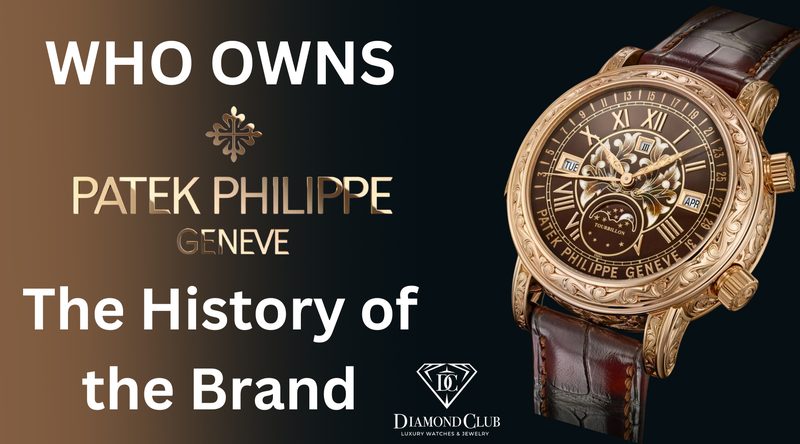
What has changed is ownership. In 1932, the Stern family — who had been supplying dials to Patek Philippe — acquired the company. They have owned it since. Four generations of Sterns. No LVMH. No Richemont. No Swatch Group. No shareholders to report to. No quarterly earnings to inflate. When Thierry Stern, the current president, decides to discontinue the best-selling model in the company’s history (the Nautilus 5711), he does not need board approval. He just does it.
That family ownership is not a marketing talking point. It is the structural reason why Patek Philippe can operate differently from every other watch brand. They can invest in a new caliber for fifteen years before releasing it. They can refuse to increase production when demand outstrips supply by a factor of ten. They can maintain a watchmaking school that trains apprentices for four years before they touch a customer’s watch. No publicly traded company would accept those economics.
Key Milestones
1839 — Founded in Geneva by Antoni Patek and Franciszek Czapek
1845 — Adrien Philippe joins; keyless winding system patented
1868 — First Swiss wristwatch (made for Countess Koscowicz of Hungary)
1925 — First perpetual calendar wristwatch
1932 — Stern family acquires Patek Philippe
1976 — Gerald Genta designs the Nautilus (Ref. 3700/1A)
1989 — Calibre 89 pocket watch — most complicated watch ever made (33 complications)
1997 — Aquanaut collection launched
2009 — Patek Philippe Seal replaces Geneva Seal (higher standards)
2019 — Grandmaster Chime Ref. 6300A sells for $31.19M (most expensive watch ever sold)
2024 — Cubitus collection launched — first new family in 27 years
What Makes Patek Philippe Special — Five Pillars
1. In-House Manufacturing
Patek Philippe designs and manufactures their movements entirely in-house. From the balance spring (one of the most difficult components in watchmaking) to the cases, dials, and bracelets — everything is produced within Patek facilities. Their Plan-les-Ouates manufacture houses over 2,000 employees. Most brands, including some at the “luxury” level, buy movement blanks from ETA or Sellita and decorate them. Patek starts from raw metal.
2. Movement Finishing
Here is a specific example. The Caliber 324 SC (used in the 5811 Nautilus) has 213 parts. Every single part is hand-finished. The bridges receive Geneva stripes — not the shallow, decorative kind you see on mid-range Swiss watches, but deep, wide stripes with crisp edges that catch and release light like liquid. Every visible edge is beveled at 45 degrees and mirror-polished by hand using boxwood sticks and diamond paste. Each screw slot is aligned. This finishing takes weeks per movement and serves zero functional purpose. It exists purely because Patek believes that the unseen parts of a watch should be as beautiful as the visible ones.
3. Innovation
Patek Philippe holds over 100 patents in watchmaking. They invented the first wristwatch perpetual calendar (1925), the first annual calendar mechanism (1996), the Spiromax balance spring in Silinvar (silicon-based, anti-magnetic, temperature-stable). When they released the Caliber 240 — an ultra-thin automatic with a micro-rotor — it was considered mechanically impossible at its 3.88mm thickness. It has been in continuous production since 1977.
4. Lifetime Service Commitment
Patek Philippe will service any watch they have ever made. A pocket watch from 1860 — they will service it. They maintain an archive of every watch produced and keep spare parts and technical drawings going back to the company’s founding. No other brand offers this level of after-sales commitment. Rolex will service modern watches. Omega will service recent production. Patek will service everything. Forever.
5. Value Retention
Patek Philippe watches hold value better than any other brand at auction. The top 10 most expensive watches ever sold at auction include multiple Patek Philippes — headed by the Grandmaster Chime at $31.19 million. Even entry-level Patek models appreciate on the secondary market. A Calatrava 5196 bought at retail will sell for at or above retail within a year. No other brand achieves this consistently across its entire catalog.
Insight: Patek Philippe’s slogan — “You never actually own a Patek Philippe. You merely look after it for the next generation.” — is not just marketing copy. It is a factual description of their service model and value retention. Most Pateks sold at auction today are pieces from the 1940s-1970s that have passed through two or three owners.
The Patek Philippe Seal — Beyond Geneva
In 2009, Patek Philippe did something that shocked the Swiss watch industry. They abandoned the Geneva Seal — the Poincon de Geneve — that had been the highest standard of watchmaking quality since 1886. The reason? It was not strict enough.
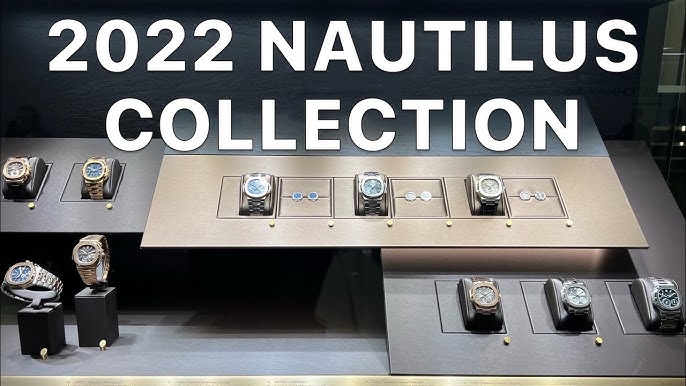
The Geneva Seal certifies movement finishing and assembly quality but says nothing about the completed watch’s accuracy. A Geneva Seal watch could pass certification and then run 30 seconds fast per day — technically acceptable under the rules. Patek Philippe decided that was inadequate.
The Patek Philippe Seal requires -3 to +2 seconds per day accuracy measured on the cased watch (not just the naked movement). It covers movement finishing, case finishing, dial quality, and gem-setting quality. It also guarantees that Patek will service the watch for its entire lifetime. No other certification in watchmaking covers the finished product so thoroughly.
Best Patek Philippe Models in 2026
Here are the five models that, in my assessment, best represent Patek Philippe’s current lineup — each excelling in a different category.
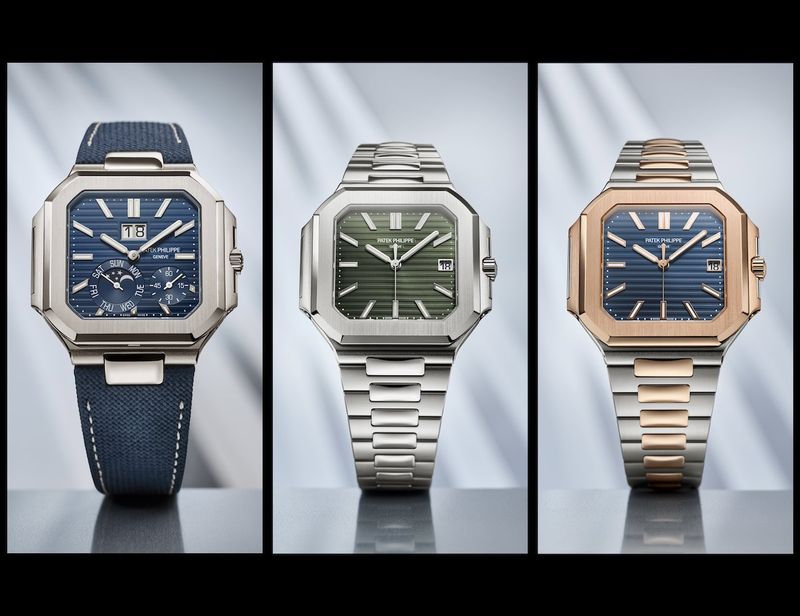
Nautilus 5811/1A — The New King
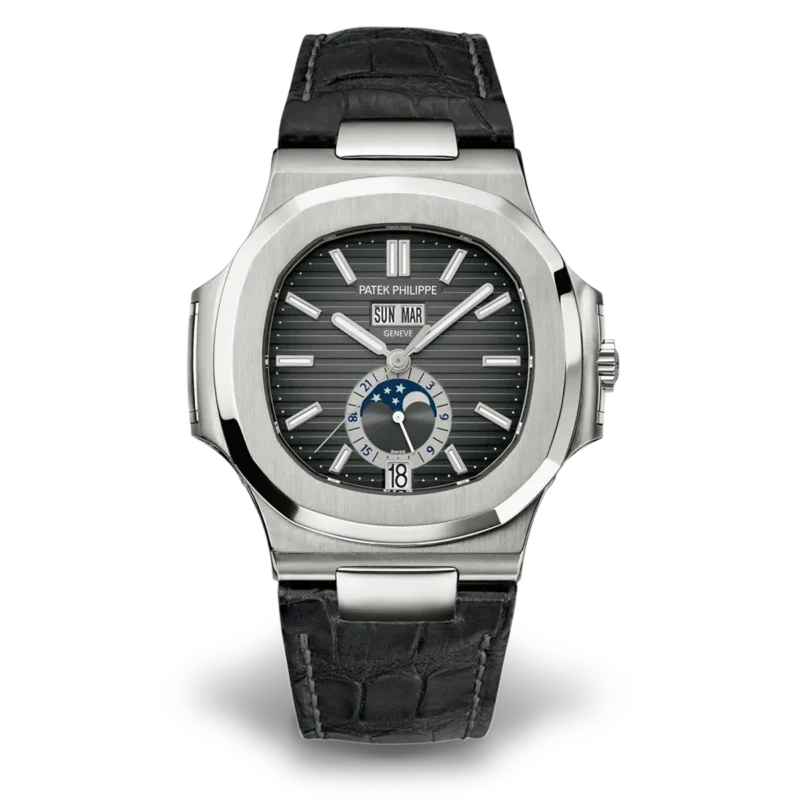
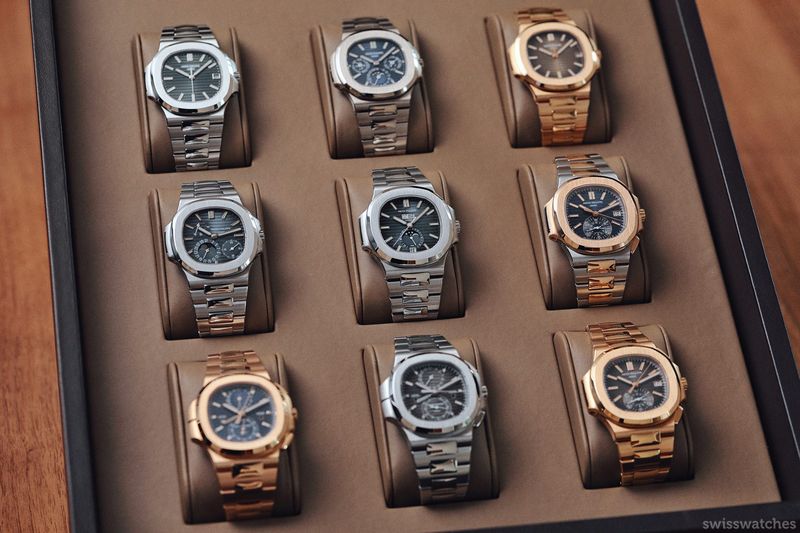
The 5811 replaced the legendary 5711 in 2021 and has since established itself as the definitive luxury sports watch. The case grew to 41mm (from 40mm), the dial received a new blue-green gradient tone, and the movement upgraded to the Caliber 26-330 S C with improved power reserve. The bracelet construction was refined — thinner links, better articulation, more comfortable drape on the wrist.
After three years of production, the 5811 has fully emerged from the 5711’s shadow. Waiting lists at authorized dealers exceed seven years. Secondary market pricing sits consistently above retail. For our detailed breakdown, see the Patek Philippe Nautilus replica guide.
Aquanaut 5167A — Understated Perfection
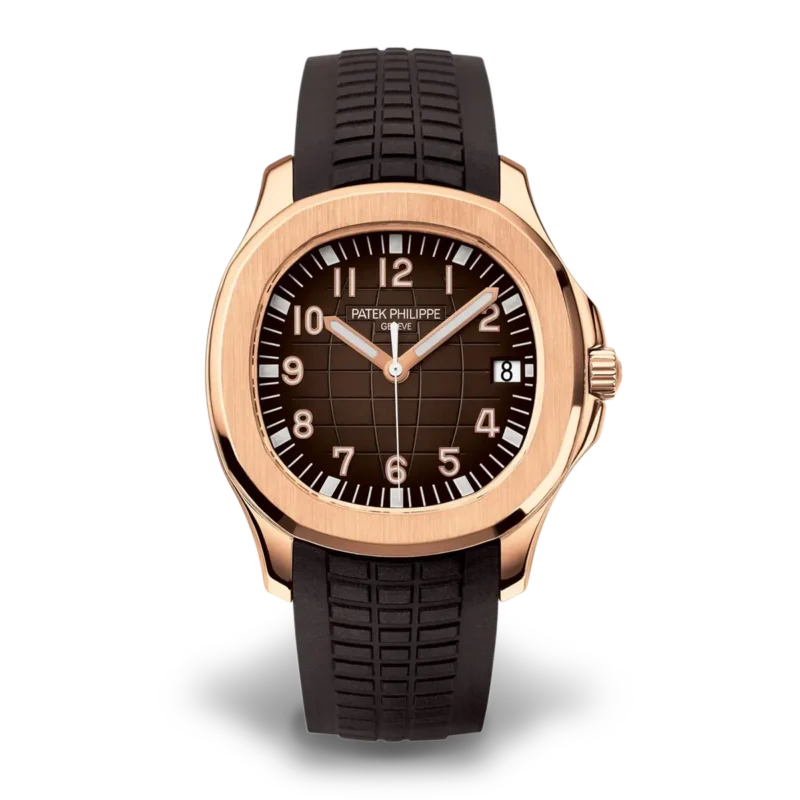
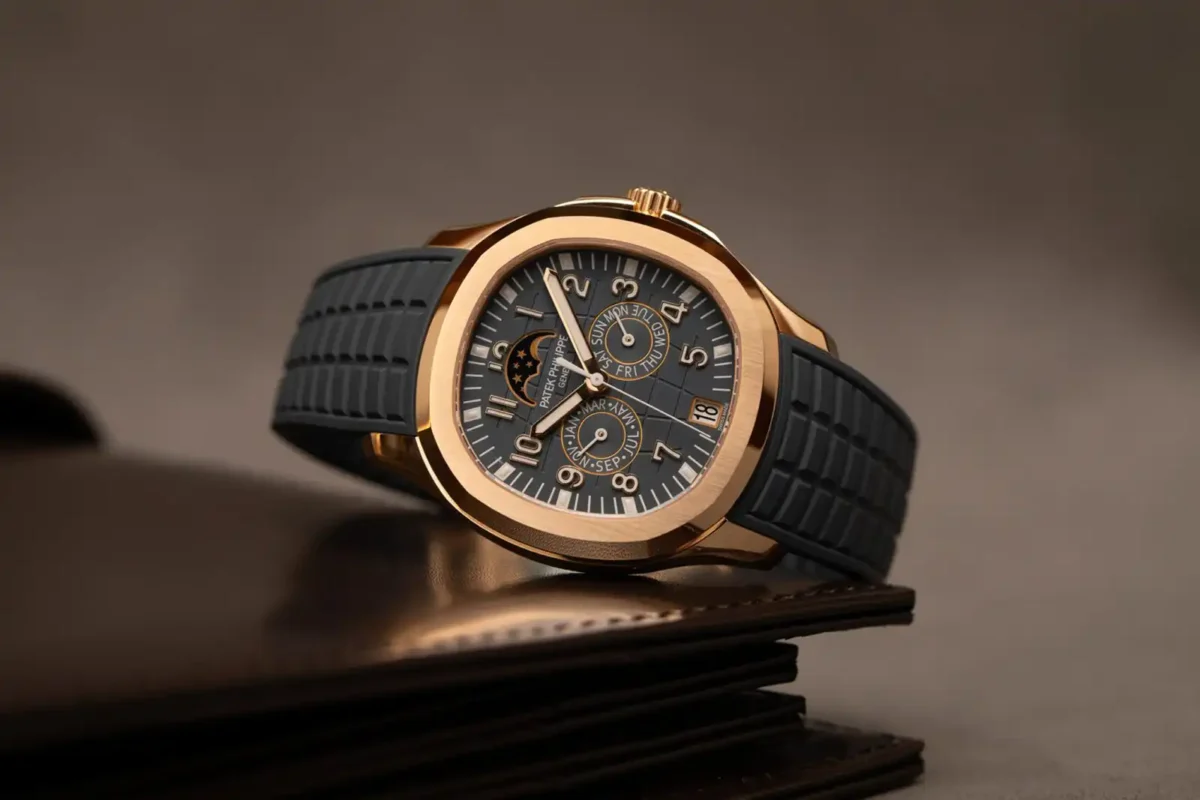
The Aquanaut does not get the same breathless coverage as the Nautilus, and that is exactly why I love it. At 40mm with a tropical rubber strap, it weighs significantly less than the steel-bracelet Nautilus. The embossed dial pattern — a checkerboard gradient — is distinctive without being aggressive. Caliber 324 S C delivers the same accuracy and power reserve as the Nautilus movement.
For daily wear — gym, travel, office, dinner — the Aquanaut is the better choice. The rubber strap handles sweat and water without complaint. The 120m water resistance is genuine. If the Nautilus is a tuxedo, the Aquanaut is a perfectly fitted navy blazer. Our Aquanaut replica review covers the replica execution in detail.
Calatrava 5227 — The Soul of Patek
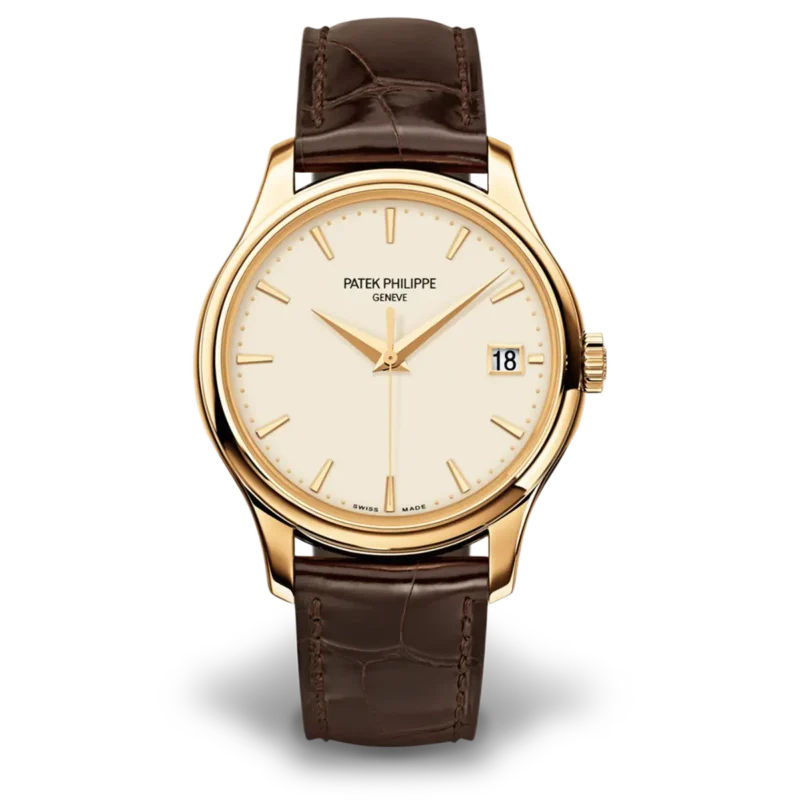
If the Nautilus represents Patek Philippe’s commercial peak, the Calatrava represents its soul. The 5227 is a 39mm round case in yellow, white, or rose gold with a hinged officer’s caseback — you can swing it open like a door to reveal the movement. The dial is clean, elegant, and restrained. Two hands, a small seconds subdial, and nothing else. This is watchmaking stripped to its purest expression.
The Caliber 324 S C automatic movement visible through the caseback is finished to standards that make grown watchmakers emotional. If you have ever seen a Calatrava 5227 in rose gold under a desk lamp — the way the light plays across the Clous de Paris hobnail bezel — you understand why this watch exists. See our Calatrava replica review.
Cubitus 5395 — Patek’s Bold Gamble
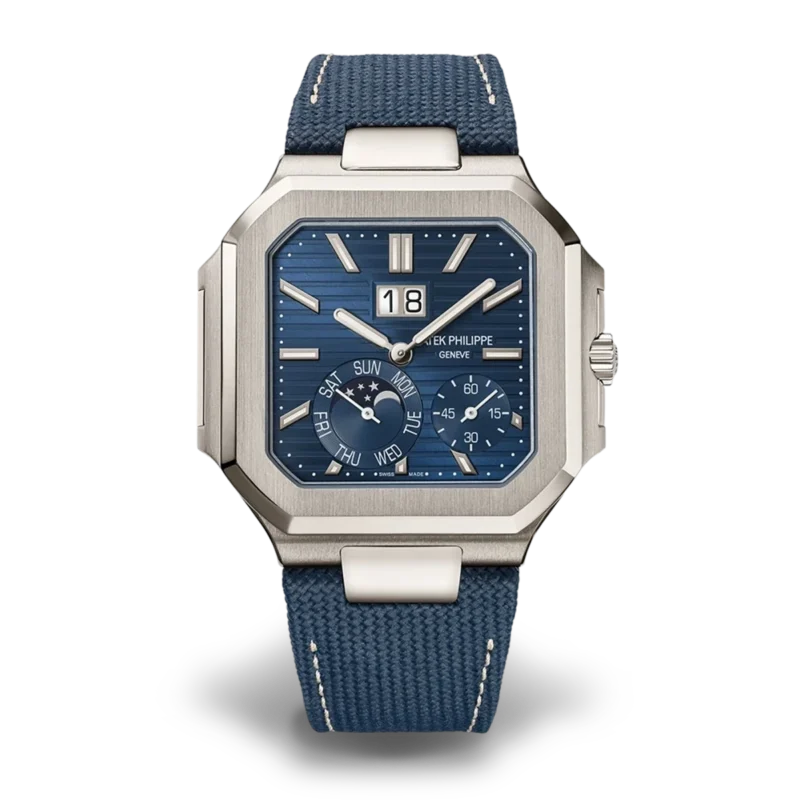
Launched at Watches & Wonders 2024, the Cubitus divided collectors instantly. A 45mm cushion-shaped case with integrated bracelet. Some called it a masterpiece. Others called it a crime against Genta’s legacy. Having worn one for a week at a dealer event, I lean toward masterpiece — with reservations.
The size is significant at 45mm, but the cushion shape distributes mass differently than a round case. It sits surprisingly comfortable. The two-tone steel-and-gold version (5395/1AR) is the most interesting execution — the contrast between brushed steel and polished rose gold creates visual depth that photographs cannot capture. The Caliber 240 PS micro-rotor movement inside is a technical gem. Whether the Cubitus becomes the next Nautilus or a footnote remains to be seen, but Patek’s willingness to take this risk says something about the brand’s confidence.
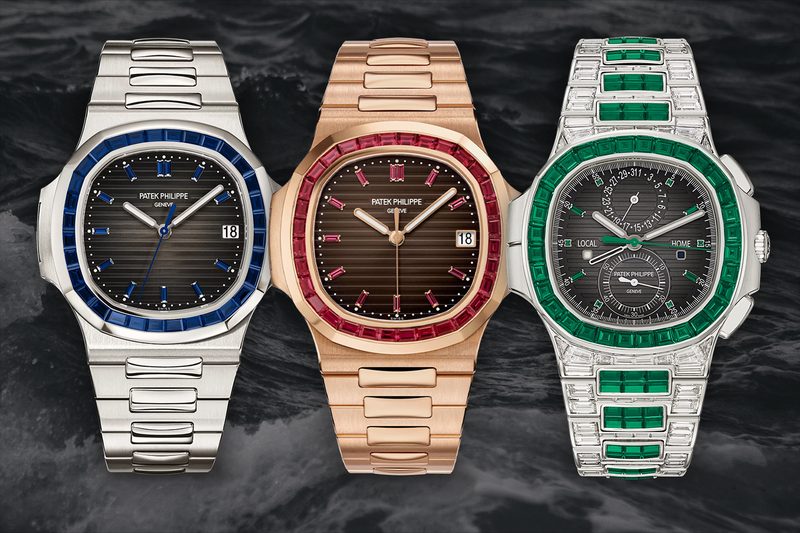
Grand Complications — 5270P, 5236P, 5320G
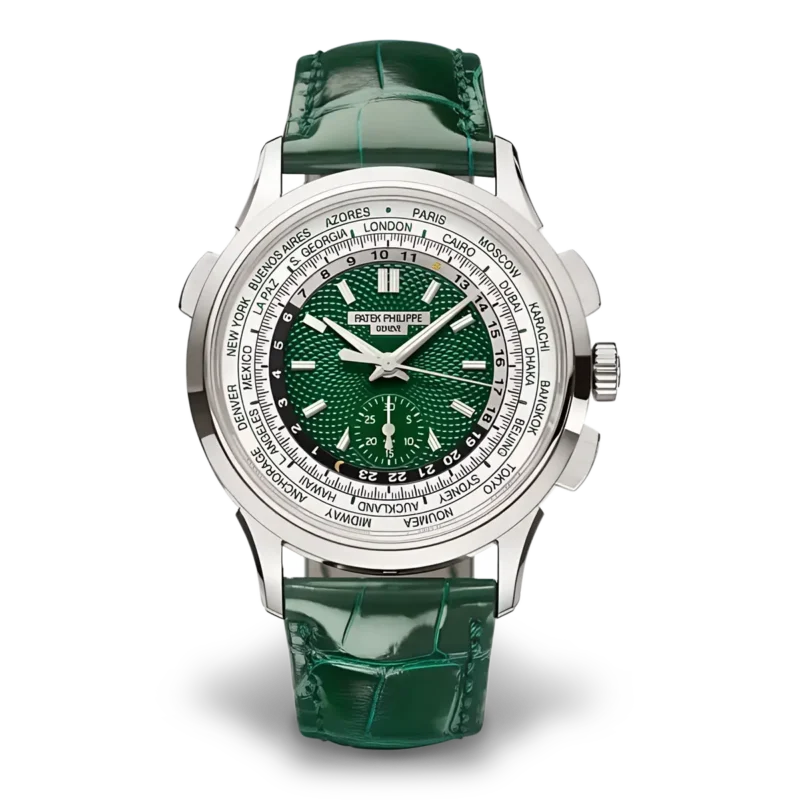
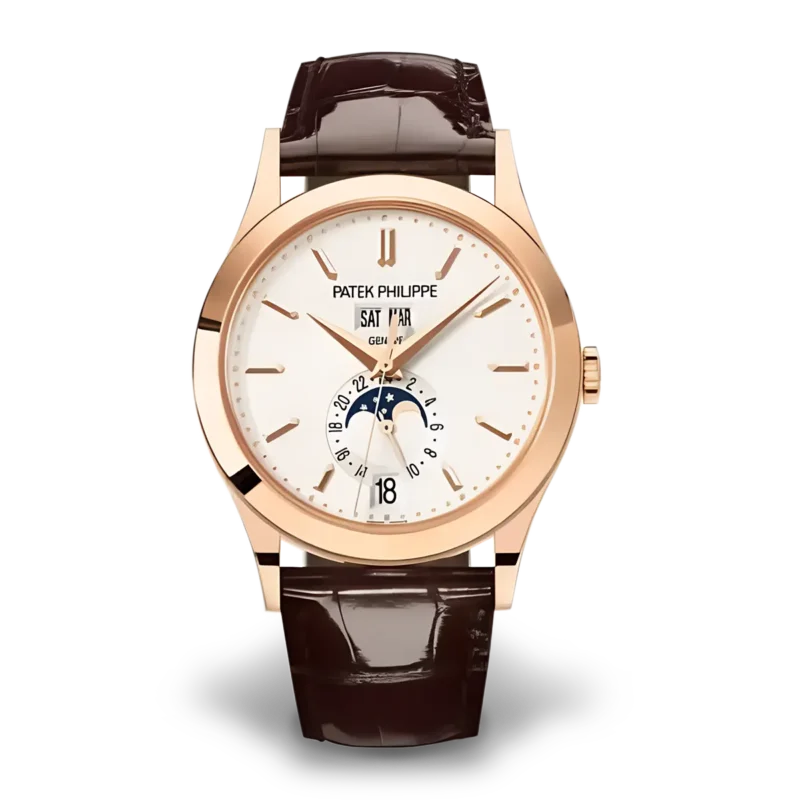
The Grand Complications collection is where Patek Philippe demonstrates mechanical supremacy. The 5270P (perpetual calendar chronograph in platinum) combines two of watchmaking’s most difficult complications in a single movement. The 5236P features an in-line perpetual calendar with a linear date display — a completely new way of reading the calendar that required years of R&D. The 5320G (perpetual calendar with day/night indicator) in white gold is arguably the most beautiful perpetual calendar dial ever produced.
These are not watches you wear to impress strangers. These are watches you own because you understand what they represent mechanically. Each Grand Complication takes 9-12 months to assemble by a single master watchmaker. The perpetual calendar mechanism accounts for months of 28, 29, 30, and 31 days and will not need correction until the year 2100.
2026 Model Comparison
Frequently Asked Questions
Why is Patek Philippe more expensive than Rolex?
Three factors: production volume (Patek makes ~60,000 vs. Rolex’s 1M+), movement finishing (Patek hand-finishes every component to a standard Rolex does not attempt), and in-house manufacturing depth (Patek produces virtually everything internally, including balance springs and cases). Rolex is an excellent watchmaker. Patek operates at a fundamentally different level of craftsmanship.
Is the Nautilus 5811 worth the wait?
If you can get an allocation — absolutely. The 5811 is the most complete luxury sports watch in production today. The 41mm case size is perfect for most wrists, the movement is accurate and reliable, and the finishing is unmistakably Patek. The waiting list reality — seven years or more at most ADs — makes it a long-term commitment.
What is the best entry-level Patek Philippe?
The Calatrava 5196 (manual wind) or 6007A (limited steel Calatrava) are the most accessible genuine Patek Philippes at retail. Both offer full in-house movements, the Patek Philippe Seal, and the brand’s lifetime service guarantee. They will not turn heads like a Nautilus, but they represent the same level of watchmaking quality.
How does the Cubitus compare to the Nautilus?
The Cubitus (45mm cushion) is larger and bolder than the Nautilus (41mm octagonal). It uses the ultra-thin Caliber 240 PS micro-rotor versus the Nautilus’s 26-330 S C. The Cubitus is a statement piece; the Nautilus is a versatile daily watch. Different personalities, same finishing standards. The Cubitus is still too new to judge its long-term market position.
Do Patek Philippe watches hold their value?
Better than any other brand, consistently. The Nautilus and Aquanaut trade above retail on the secondary market. Calatravas hold value at or near retail. Grand Complications appreciate significantly over time. Even vintage Pateks from the 1950s–1970s have seen annual appreciation of 8-12% over the past two decades. No other watch brand matches this track record.
Patek Philippe is special because they chose to be, and they have the independence to enforce that choice generation after generation. The Nautilus 5811 is the watch everyone wants. The Aquanaut is the watch everyone should consider. The Calatrava is the watch every collector eventually comes back to. The Cubitus is the gamble that might define the next era. And the Grand Complications are the reason the brand exists. Thirty years of handling these watches, and the feeling of opening a Patek caseback and looking at the movement through a loupe has never gotten old. I do not expect it ever will.