


Patek Philippe 5711 vs 5811 — Every Change Explained
Mar
Patek Philippe 5711 vs 5811: The Succession That Split a Community
The Patek Philippe 5711 vs 5811 question has dominated every serious watch conversation since Watches & Wonders 2024. Patek dropped the 5711/1A in January 2021 with a final olive-green dial edition, then went quiet for three years. When the 5811/1G appeared in white gold with that familiar blue gradient dial, the reaction was immediate and divided. Half the community called it a masterpiece of restraint. The other half called it a cash grab in precious metal.
I have worn the 5711/1A-010 (blue dial) for six years and handled the 5811/1G within weeks of its announcement. What follows is not recycled press-release language. This is a reference-by-reference breakdown built on real wrist time, measured with calipers, and informed by three decades of watching Patek Philippe play the long game.
If you are exploring the Nautilus line for the first time, start with our Nautilus replica guide for the full family tree. This article focuses exclusively on the generational leap between these two specific references.
01
5711 History: The Watch That Became Impossible to Buy (2006–2021)
The Nautilus story starts in 1976 with Gerald Genta’s ref. 3700, but the 5711 vs 5811 conversation begins in 2006. That year, Patek introduced the 5711/1A as the new-generation Nautilus — a 40mm stainless steel time-and-date watch powered by the caliber 324 S C. It replaced the 3710/1A which had served since 1998.
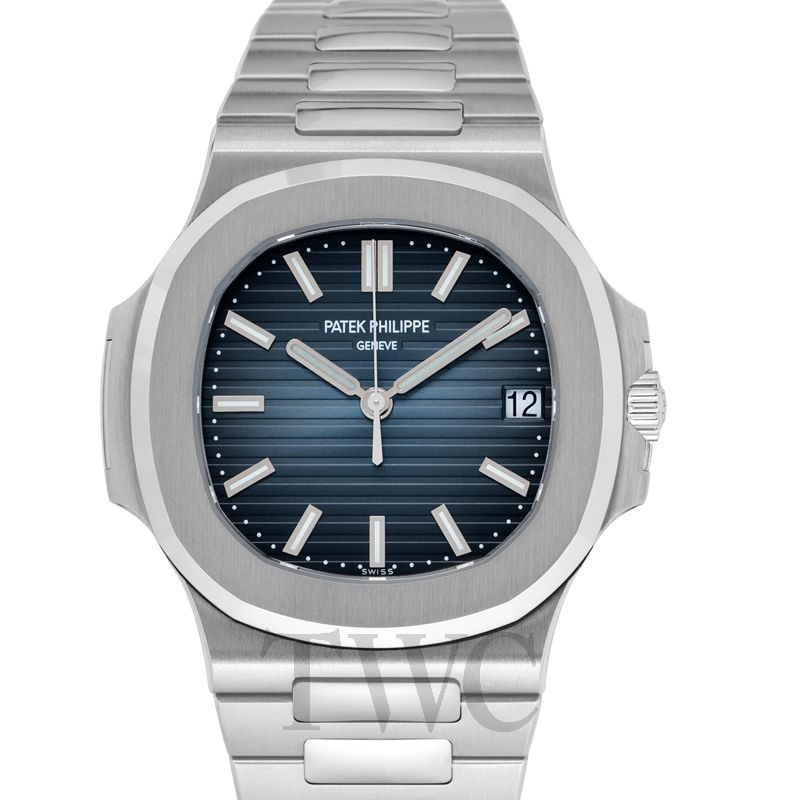
Nobody panicked at the time. The 5711 retailed around $25,000 and sat in Authorized Dealer windows for weeks. I picked mine up from a Geneva AD after a three-month wait. That feels laughable now.
Between 2010 and 2018, something shifted. Instagram amplified the Nautilus silhouette. Celebrity wrists broadcasted it to millions. Waiting lists grew from months to years. By 2019, the secondary market price for a steel 5711/1A-010 (blue dial) had crossed $60,000 — more than double retail. Patek had created the single most coveted production watch in modern history, and they knew it.
Insider Note: Patek Philippe produced an estimated 20,000–25,000 Nautilus units per year across all references during the 5711 era. For context, Rolex produces roughly 1 million watches annually. The scarcity was genuine, not manufactured.
Then came the farewell. In January 2021, Patek confirmed the patek 5711 discontinued news that collectors had dreaded. The final edition — ref. 5711/1A-014 with an olive green sunburst dial — became an instant grail. At auction, those olive dials have fetched north of $400,000. A stainless steel time-and-date watch, selling for the cost of a house in most countries.
The discontinuation was strategic. Thierry Stern said publicly that no single model should define Patek Philippe. Fair enough. But everyone knew a successor was coming. The question was when, and what it would look like.
That olive green farewell edition did something interesting to the market. It signaled that Patek was willing to create scarcity on purpose — a limited final run that would become a collector touchstone. The green dial was not just a color choice. It was a punctuation mark at the end of a sentence Patek had been writing for fifteen years.
02
The 5811 Arrives: Every Single Change Catalogued
Watches & Wonders 2024 answered both questions. The 5811/1G-001 landed in white gold with a blue-black gradient dial, and it was unmistakably a Nautilus. Same porthole shape. Same horizontal embossed lines. Same integrated bracelet architecture. But the details had been reworked across every surface.
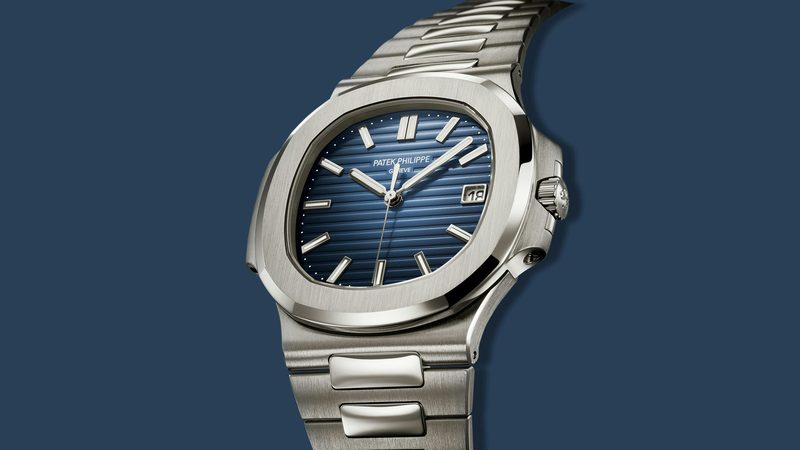
The headline number: 40mm vs 41mm. The 5811 grows by one millimeter in diameter. Does not sound like much. On the wrist, the difference is perceptible but not dramatic. The watch reads slightly more contemporary, slightly more authoritative. The lug-to-lug span also increases, which means wrists under 6.5 inches might notice the extra reach.
Thickness drops from 8.3mm to 8.2mm. A tenth of a millimeter is invisible to the naked eye but speaks to Patek’s case engineering — a larger watch that sits flatter is harder to build than a smaller one.
The case construction is the biggest engineering change. The 5711 used a monoblock case back pressed onto the mid-case, sealed with a gasket. The 5811 switches to a two-piece case construction — a separate case back screwed onto the mid-case. Why does this matter? Two reasons. First, it allows easier servicing without risking damage to the case during opening. Second, it changes the acoustic resonance of the case. Wind the 5811 and it sounds subtly different. Richer, if you want the subjective take.
The bracelet received a patented clasp mechanism — a new fold-over design with a push-button release that Patek filed patents for. The 5711’s clasp was adequate but dated. It snapped open with a satisfying click, sure, but the 5811’s mechanism operates on a different plane of precision. The articulation of the links themselves was also refined, with fractionally more play between links for improved drape.
And then there is the material question. Steel vs white gold is the elephant in the room. The 5711/1A was stainless steel. The 5811/1G is 18k white gold. That shifts the weight from approximately 115 grams to roughly 155 grams on the wrist. You feel that extra heft immediately. Some collectors love it — it signals substance. Others find it fatiguing after eight hours.
The bezel chamfers are wider on the 5811 by approximately 0.2mm per side. That amplifies the polished surface area, which in direct sunlight creates a more aggressive flash. The ear tips — those distinctive hinge-like extensions on either side of the case — are fractionally softer in their transition. Not rounded, just eased. It gives the 5811 a presence that reads more refined at the expense of a tiny amount of the 5711’s angular sharpness.
For those studying the movement architecture, our movement clone analysis breaks down the caliber differences in mechanical detail.
03
Side-by-Side Specification Comparison
Here is the complete patek philippe 5711 vs 5811 specification breakdown. Every number verified against official Patek Philippe documentation and my own measurements:
The caliber 26-330 S C carries over unchanged. Same architecture inherited from the earlier 324 S C line, updated with the stop-seconds mechanism Patek added in 2020. Same Gyromax balance wheel with gold timing weights. Same Spiromax silicon hairspring that laughs at magnetic fields up to 200 gauss. The engine is identical — every change lives in the chassis.
Look at that retail column. $30,000 vs $69,790 represents more than a material upcharge. Patek repositioned the Nautilus as a precious-metal proposition, distancing it from the “steel sports watch” category that had become overcrowded. Whether that repositioning is justified depends on whether you value steel’s industrial honesty or white gold’s quiet declaration of intent.
04
The Dial Difference: Sunburst Gradients Under a Loupe
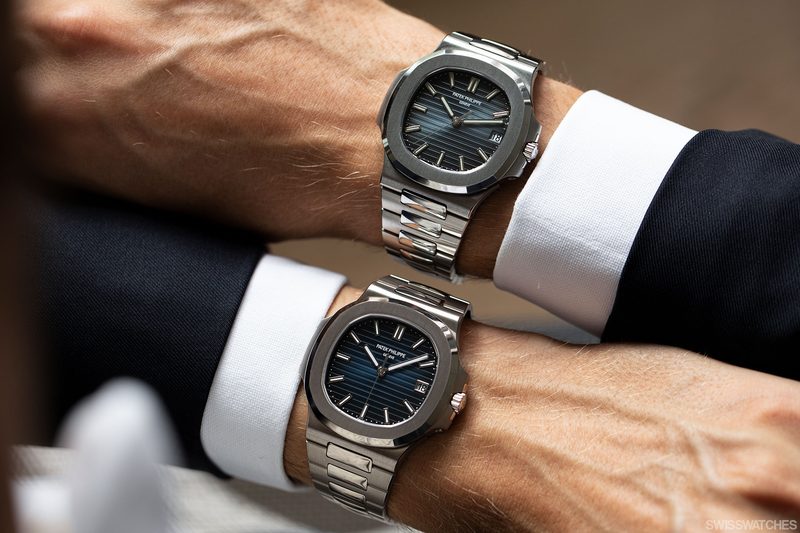
Both watches wear blue-black gradient dials with horizontal embossed lines. At a glance — identical. Under a loupe, the differences emerge and they tell you exactly how Patek approached this redesign.
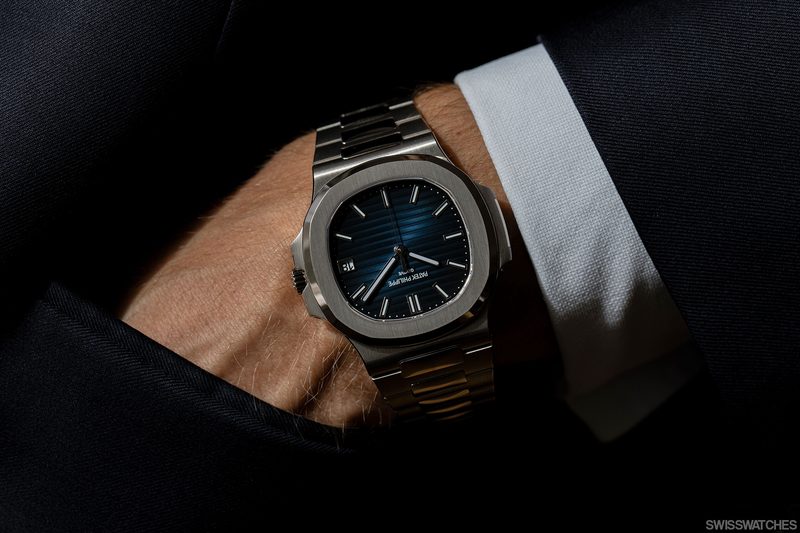
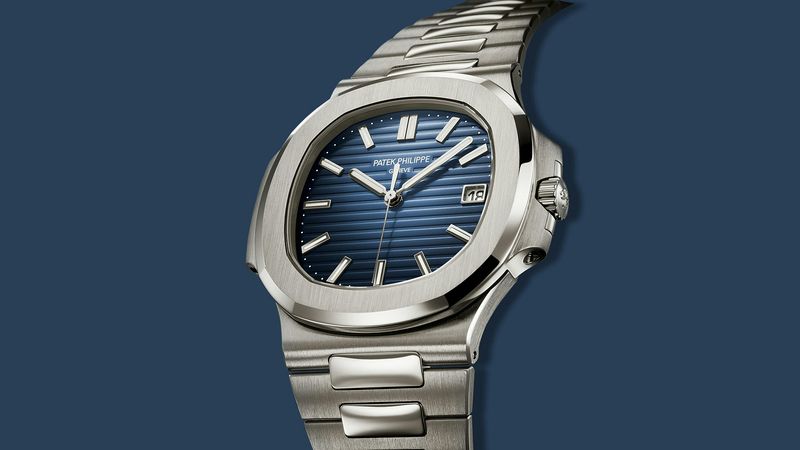
The 5711’s sunburst blue gradient transitions from a near-black center to medium blue at the edges. The embossed horizontal lines are uniform in width and spacing, running edge to edge across the dial at approximately 0.6mm intervals. The date window at 3 o’clock has a slim frame and white backing. Applied hour markers in white gold sit flush with the dial surface. It is a refined, mature dial that photographs beautifully but looks even better in shifting daylight.
The 5811 keeps the same gradient concept but deepens the blues. The transition from center to edge is more dramatic — darker at the middle, with the blue appearing richer and more saturated at the flanks. The embossed lines appear fractionally finer under magnification. Whether this is an intentional change or a result of the slightly larger dial surface is debatable. I believe it is intentional. Patek does not leave details to chance at this level.
The date window received the most visible update. It now features a slightly recessed frame that creates a shadow line around the aperture. Small change, significant visual impact. The date disc itself uses a typeface that appears marginally bolder. These are the kinds of details that only matter when you hold both watches next to each other — which is exactly what collectors do.
Hands-On Detail: Rotate both watches slowly under a single light source. The 5711 dial “breathes” with a warm blue shift. The 5811 dial has a cooler, steelier quality to its gradient. If the 5711 is midnight on a summer evening, the 5811 is midnight in December. Subtle, but real.
The applied indices deserve attention. Both use white gold baton markers with a luminous strip. The 5811’s markers are imperceptibly taller — roughly 0.1mm — to maintain visual proportion against the larger dial diameter. The 12 o’clock double baton carries a touch more gap between the two bars. Hands remain the same dauphine shape, white gold, with luminous fill. The seconds hand on both references is a thin stick with no counterweight.
The luminous material on the hands and markers uses the same green-emission compound. Lume performance is comparable — approximately 3–4 hours of usable glow after full charge. Neither watch is designed for cave diving, and the lume reflects that. It exists for reading the time in a dim restaurant, not working through a shipwreck.
05
Case Construction: Monoblock vs Two-Piece Architecture
This is where the 5811 makes its strongest engineering argument. And it is a change that most people overlook because it is invisible from the front of the watch.
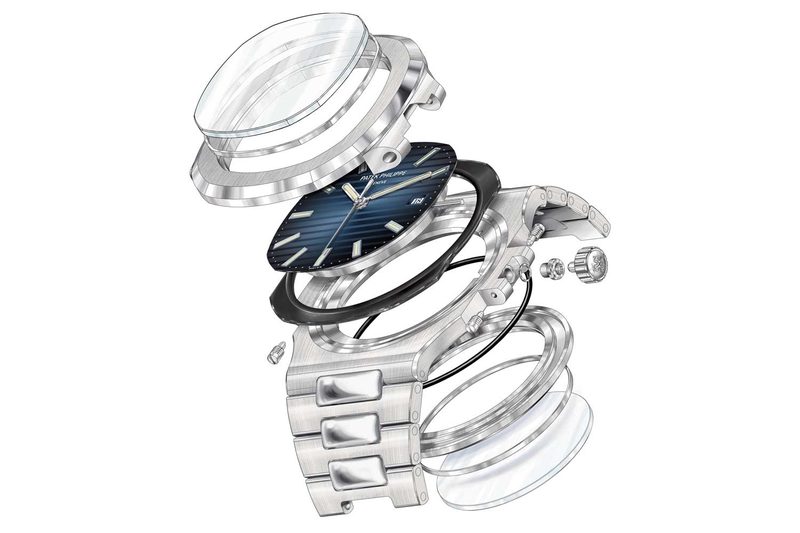
The 5711 uses a monoblock case. The case back is pressed onto the mid-case using specialized tools. Opening it for service requires a case press and careful alignment to avoid marring the polished surfaces. Every watchmaker I know has a horror story about a scratched 5711 case back. The tolerances are punishing — Patek machines these cases to micron-level precision, and any misalignment during reassembly leaves evidence.
The 5811’s two-piece case separates the back from the mid-case entirely. The back screws into the mid-case using a threaded ring, similar in principle to the approach Audemars Piguet uses on the Royal Oak 15500, though Patek’s execution differs in thread pitch and gasket arrangement. This gives several practical advantages:
- Easier servicing — watchmakers can open and close the case without risk of cosmetic damage
- Better seal consistency — screw-down backs maintain water resistance more reliably over repeated openings
- Improved acoustic profile — the rotor sounds different; the case resonates differently when tapped
- Case rigidity — the two-piece design allows Patek to tune case stiffness independently of the back
- Future-proofing — easier to swap movements in future iterations without redesigning the entire case
There is a subtle detail that most reviews miss. The 5711’s monoblock case had a very slight flex point at the 3 o’clock and 9 o’clock ear junctions under extreme pressure. Not enough to affect water resistance, but measurable with precision instruments. The 5811’s two-piece design eliminated that flex. The case is stiffer overall, which contributes to the slightly different feel when you press the crystal against your palm — a test that sounds ridiculous but tells you a lot about case integrity.
The crown position and guards remain identical. Unsigned crown, smooth operation, approximately 28 clicks for a full manual wind. Crown thread engagement feels marginally tighter on the 5811, likely due to the improved gasket system that comes with the two-piece architecture.
Understanding how different replica factories handle these case construction differences is critical for anyone evaluating quality tiers. The monoblock-to-two-piece transition is the single hardest element to replicate accurately.
06
Which One Works Better as a Replica?
Here is where thirty years of handling watches across every quality tier gives me perspective that spec sheets cannot provide. The nautilus 5711 vs 5811 comparison takes on a completely different dimension when you evaluate replication difficulty.
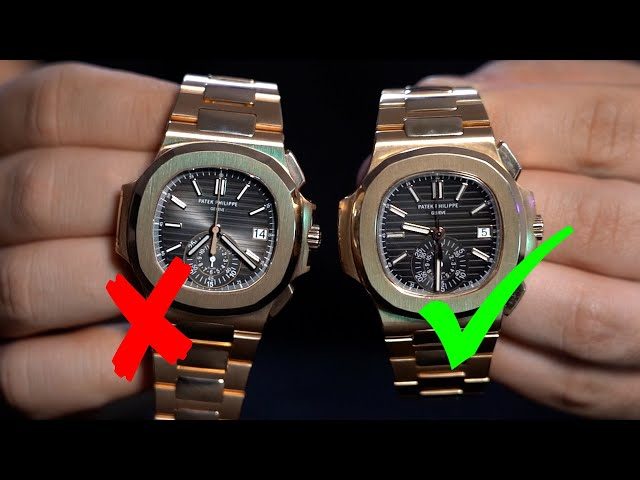
The 5711 has been replicated for nearly two decades. Factories have had eighteen years to study, measure, and refine their reproductions. The monoblock case, while challenging to execute perfectly, is now well-understood. Bracelet link proportions, clasp geometry, dial gradient patterns — the best examples nail these details with remarkable accuracy. The 5711 is a mature platform in the replica ecosystem.
The 5811 is newer territory. The two-piece case construction introduces complexity that some factories handle well and others fumble. The patented clasp mechanism is the hardest single element to reproduce — the spring tension, the button feel, the deployment angle all need to match. Early 5811 replicas had noticeably stiff clasps. The second generation improved significantly, and third-generation versions arriving in 2026 are getting remarkably close.
The white gold material creates the biggest challenge for 5811 replicas. Genuine 18k white gold has a specific density of approximately 15.7 g/cm³ that stainless steel at 7.9 g/cm³ cannot match. The best factories use weighted case inserts or tungsten-backed case elements to approach the correct wrist feel. A 5711 steel replica can nail the weight perfectly. A 5811 replica always compromises here unless the buyer opts for a genuine precious metal case — which some premium factories offer at a significant upcharge.
There is also the color question. White gold and stainless steel look similar but not identical. White gold has a warmer, slightly yellowish undertone compared to steel’s cooler, bluer sheen. Under fluorescent lighting the difference nearly vanishes. Under warm incandescent light or direct sunlight, a trained eye can spot it. Rhodium plating on the replica case helps bridge this gap, but rhodium wears off over 2–3 years and needs reapplication.
My honest recommendation: if you want the highest possible accuracy today, the 5711 replica is the safer bet. If you want the latest reference and can accept that the clasp and weight will be 90% rather than 98%, the 5811 is absolutely worth it. The gap is closing every quarter. Check our best Patek Philippe replica rankings for current factory comparisons across both references.
07
Investment and Collectibility: The Numbers That Matter
The genuine market tells a fascinating story about how collectors value heritage versus innovation.
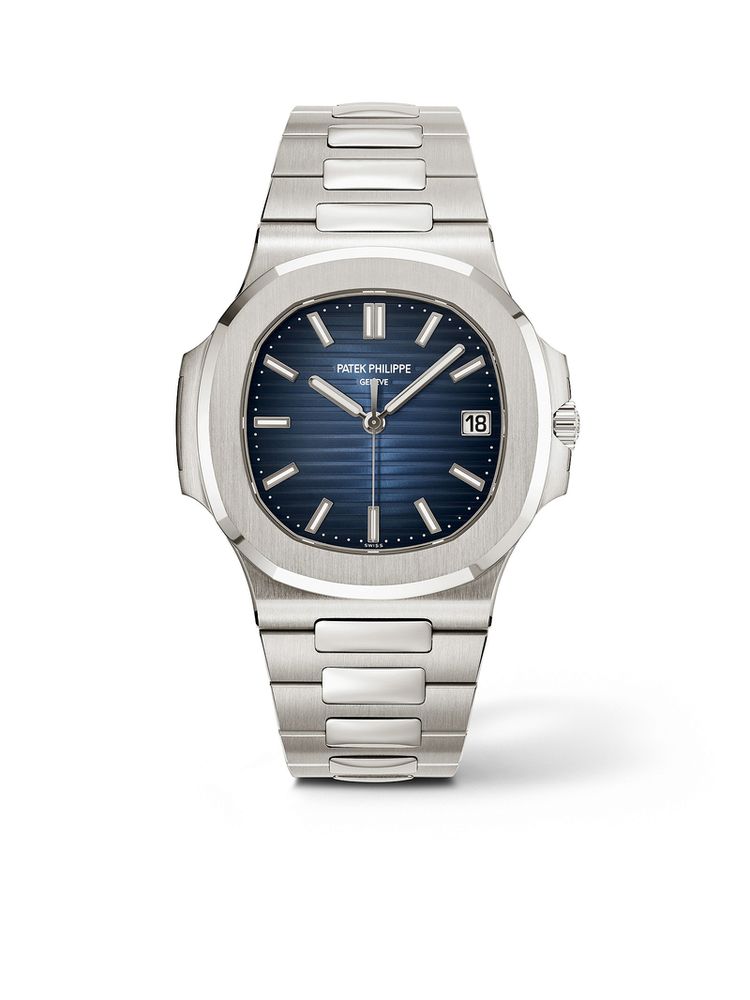
The 5711/1A-010 (blue dial, steel) retailed at approximately $30,000 vs $69,790 for the 5811/1G-001. That is a 133% price increase at retail, driven almost entirely by the jump from steel to white gold. On the secondary market, the picture is more subtle.
As of early 2026, a 5711/1A-010 in excellent condition trades between $120,000 and $150,000 depending on box, papers, and service history. The olive green farewell edition (5711/1A-014) commands $350,000–$450,000 consistently. The Tiffany Blue 5711 from late 2021 — produced in an estimated 170 pieces — has crossed $3 million at auction.
The 5811/1G-001 trades at approximately $130,000–$160,000 on the secondary market. That puts it roughly on par with the standard blue 5711 in terms of actual money changing hands, despite the $40,000 higher retail price. This means the 5811 has a lower premium-over-retail ratio, which could represent either a buying opportunity or a signal that the market prefers the discontinued original.
Collector Perspective: The 5711 will appreciate as a closed chapter. No more will ever be made. The 5811 is still in production. From a pure investment standpoint, the 5711 has a scarcity advantage that compounds over time. But the 5811 is a better watch in almost every measurable dimension. Which matters more depends entirely on why you collect.
Here is the collector trajectory I expect over the next decade:
- 5711/1A-010 (blue steel) — Steady appreciation, 5–8% annually, eventually stabilizing as an undisputed modern classic alongside the Royal Oak 15202
- 5711/1A-014 (olive green) — Will hold extreme premiums due to “last of its kind” emotional weight and low production numbers
- 5811/1G-001 (white gold blue) — Current premium will compress as supply increases from ongoing production, then rise sharply when this reference is eventually discontinued
The patek 5711 discontinued status is its greatest asset on the secondary market. Every year that passes without new production makes existing pieces rarer. Attrition from damage, loss, and vault storage further reduces the available pool. This is basic supply dynamics, and it favors the 5711 collector who can afford to wait.
But here is the counterargument that smart money understands. The first-generation 5811 will eventually become the “original” 5811, just as the 5711/1A-001 (launched in 2006) is now more collectible than later dial variants. If Patek introduces steel, rose gold, or special dial editions of the 5811 in coming years, the launch edition 5811/1G-001 becomes the baseline reference that started the lineage. That has value too.
08
Frequently Asked Questions
Is the Patek Philippe 5711 still in production?
No. Patek Philippe discontinued the entire 5711 line in January 2021. The final edition was the 5711/1A-014 with an olive green sunburst dial. All 5711 references available today are pre-owned or new-old-stock from authorized dealers who held inventory. The 5811 is the official successor and the only Nautilus time-and-date reference currently in production.
Why did Patek switch from steel to white gold for the 5811?
Thierry Stern has stated that the Nautilus in steel became too dominant in the brand’s identity. Moving to white gold repositions the Nautilus as a precious metal proposition, aligning with Patek’s core identity as a haute horlogerie house rather than a sports watch manufacturer. It also increases the entry barrier, moving the Nautilus further from the “hype watch” territory that Stern has publicly expressed discomfort with.
Can you tell the 5711 and 5811 apart on the wrist?
At normal conversation distance — about three feet — they are nearly indistinguishable. The 1mm diameter difference is subtle, and both dials share the same color family. Up close, the 5811’s wider bezel chamfers, updated clasp, and recessed date window frame become apparent. The weight difference (steel vs white gold) is the most obvious tell for the person actually wearing it. A knowledgeable observer would need to check the case back to be certain.
Which movement does the 5811 use?
Both the 5711 (in its final configuration) and the 5811 use the caliber 26-330 S C. This is an evolution of the earlier 324 S C with the addition of a stop-seconds mechanism for precise time setting. The movement was not changed for the 5811 — all differences between the two watches are in the case, bracelet, and clasp architecture.
Will Patek ever release a steel 5811?
Thierry Stern has publicly stated that a steel Nautilus in the 5811 generation is not planned. Patek has surprised collectors before, though. A steel 5811 would trigger a buying frenzy that would make the 5711 hysteria look mild. My reading: do not expect it within the next five years, but never rule anything out with Patek. The commercial pressure to release one must be immense.
Is the 5711 replica better than the 5811 replica right now?
For overall accuracy at this moment, yes. The 5711 has had eighteen years of refinement across multiple factory generations. The case proportions, dial gradient, and bracelet feel have been perfected by top-tier producers. The 5811 replica is improving rapidly but the patented clasp and white gold weight simulation remain the hardest elements to match. Both are strong choices — the 5711 simply has a head start that the 5811 is closing fast.
How does the 5811 bracelet feel compared to the 5711?
The 5811 bracelet drapes marginally better due to fractionally more play between links. The patek philippe nautilus replica versions of both bracelets capture this difference to varying degrees. The biggest real-world difference is the clasp — the 5811’s push-button mechanism is smoother and more secure than the 5711’s standard fold-over. It is the kind of upgrade you do not appreciate until you have used both daily.
09
The Verdict on Patek Philippe 5711 vs 5811
After spending extensive time with both the Patek Philippe 5711 vs 5811, my conclusion is straightforward. The 5811 is objectively the better-engineered watch. The two-piece case, the improved clasp, the refined bezel proportions, the marginally improved dial execution — every change represents a genuine advancement. Patek did not phone this in. They spent three years making sure the successor earned its place.
But the 5711 has something the 5811 will never possess: finality. It is done. Closed. The last steel Nautilus time-and-date watch that Patek Philippe will produce in our lifetimes, probably. That carries emotional weight that transcends specifications. You cannot engineer nostalgia into a new reference, no matter how many patents you file.
If you want the best-wearing, best-engineered Nautilus available in 2026 — get the 5811 or its replica equivalent. If you want a piece of watchmaking history that closed a fifteen-year chapter — hunt down a 5711. Both decisions are correct. Neither watch will leave you wanting.
The Nautilus, in any reference, remains one of the two or three most important watch designs of the twentieth century. Whether Gerald Genta’s porthole wears 40mm of steel or 41mm of white gold, the silhouette commands respect. That has not changed in fifty years. It will not change in the next fifty.
Written from three decades of wrist time — no press releases were consulted in the making of this article.