



Patek Philippe 5208R — Grand Complication Minute Repeater
May
Patek Philippe 5208R Replica — Grand Complication — Minute Repeater, Monopusher, Instantaneous Perpetual
Grand Complication Deep Dive • 8 Sections • Updated 2026
Three Grand Complications in One Watch — What That Means
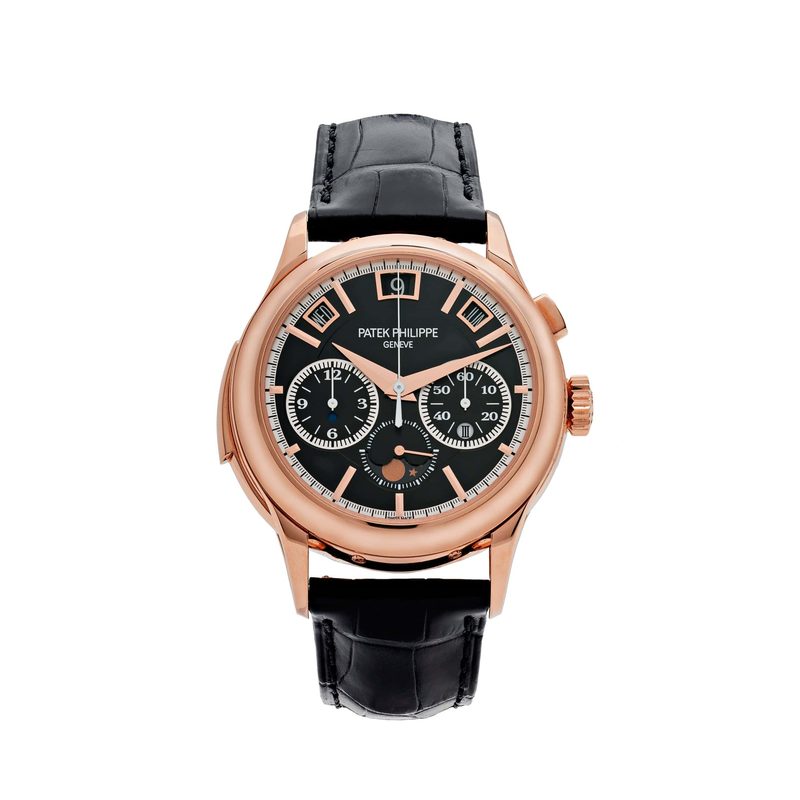
When watchmakers speak of “grand complications,” they refer to three specific categories: repeating mechanisms (minute repeaters), chronographs, and perpetual calendars. A watch containing all three is classified as a grand complication. Historically, only a handful of manufacturers have attempted this trinity in a wristwatch. Patek Philippe has been doing it since the 1989 Calibre 89 pocket watch, and the 5208 brings that expertise to the wrist in a form you can actually wear.
The minute repeater strikes the current time on demand using hammers and gongs inside the case. Slide the lever on the left side of the case, and the watch chimes: low tones for hours, a combination of low-high for quarter hours, and high tones for individual minutes. If the time is 3:47, you hear three low strikes (three hours), two double strikes (two quarters = 30 minutes), and two high strikes (two additional minutes past the quarter). Three, two, two. Time: 3:47. Pure mechanical sound, generated entirely by the motion of springs and hammers — no battery, no speaker, no electronics.
The monopusher chronograph differs from a standard two-button chronograph. A single pusher at 4 o’clock controls all three chronograph functions: start, stop, and reset. Press once to start. Press again to stop. Press again to reset. This sequence — start, stop, reset — requires three separate mechanical states from a single input, which demands a more sophisticated switching mechanism inside the movement than a conventional two-pusher layout.
The instantaneous perpetual calendar is the third pillar. Unlike semi-instantaneous or dragging perpetual calendars (where the date display creeps forward over several hours around midnight), the 5208R’s perpetual calendar snaps all displays forward in an instant. At midnight, the day, date, month, and moon phase all jump simultaneously. This requires significantly more energy at the moment of transition and more solid mechanics to handle the shock of that instantaneous change.
Caliber R TO 27 PS QI — Four Years to Build One Movement
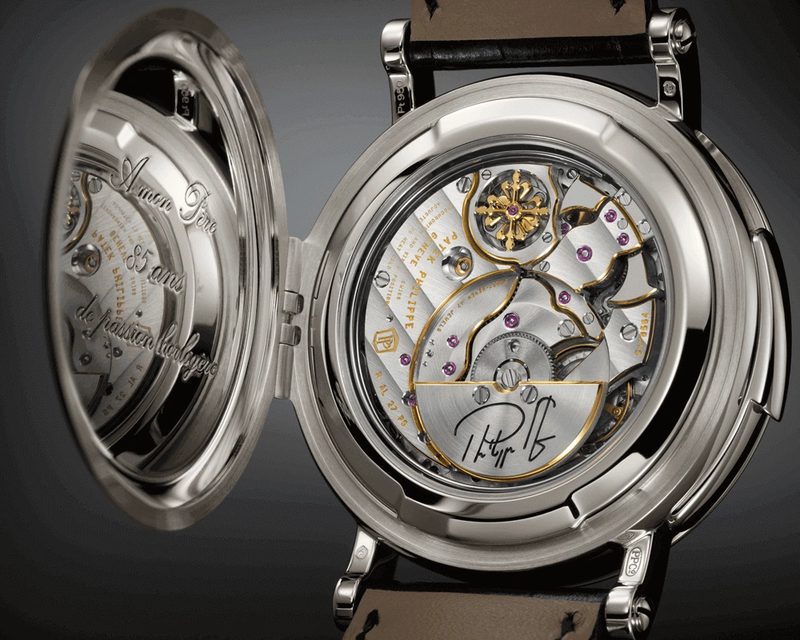
The caliber designation tells the story. R = repeater. TO = tourbillon (though the 5208 uses a different module arrangement — the “TO” refers to the movement family). 27 = caliber family. PS = perpetual calendar with seconds. QI = quantieme instantane (instantaneous calendar). The movement contains over 700 individual components — each one hand-finished, individually inspected, and assembled by a single master watchmaker.
Tip: The minute repeater tone depends on the case material. Rose gold produces warmer, longer chimes than steel — worth considering when choosing your reference.
Four years. That is the minimum time from the beginning of component manufacturing to the completed, cased, and tested 5208R. Not four years of continuous work on one watch — the components are made in batches, then sorted, finished, and assembled over that timeframe. But a single watchmaker oversees the assembly, testing, and regulation of each individual movement. This person knows every component by sight. They assemble the repeater mechanism, the chronograph, the perpetual calendar, and the base timekeeping movement into a unified whole. They regulate it. They test it. They listen to it. The sound of the repeater strike must meet Patek Philippe’s acoustic standards — clear, resonant, with proper intervals between strikes.
The minute repeater mechanism uses cathedral gongs — steel wires that wrap twice around the movement instead of the usual single revolution. This longer gong path produces a richer, more resonant tone. The hammers strike the gongs with precisely calibrated force — too hard and the sound becomes harsh; too soft and it fails to project through the case. Patek Philippe uses a patented security mechanism that prevents accidental damage to the repeater: the striking mechanism locks if you try to change the time while the repeater is chiming, and the time-setting mechanism locks while the repeater is active.
The Sound Test: Every minute repeater that leaves Patek Philippe is tested for acoustic quality. The strike sequence must be rhythmically even — no rushing, no lagging. The gong tones must be distinct (hours clearly different from minutes). The volume must project clearly through the case material. Rose gold, being softer than platinum or steel, actually enhances sound transmission. The 5208R in rose gold may sound marginally better than a platinum equivalent because the case acts as a resonance chamber.
The 42mm Rose Gold Case — Engineering for Sound
The 5208R’s 42mm case is not sized for fashion. It is sized for acoustics. A minute repeater needs internal volume for the gongs to resonate. The hammers need clearance to strike. The sound needs space to develop before passing through the case walls to the wearer’s ear. At 42mm with a thickness of approximately 12.8mm, the 5208R provides the acoustic chamber the complications demand.
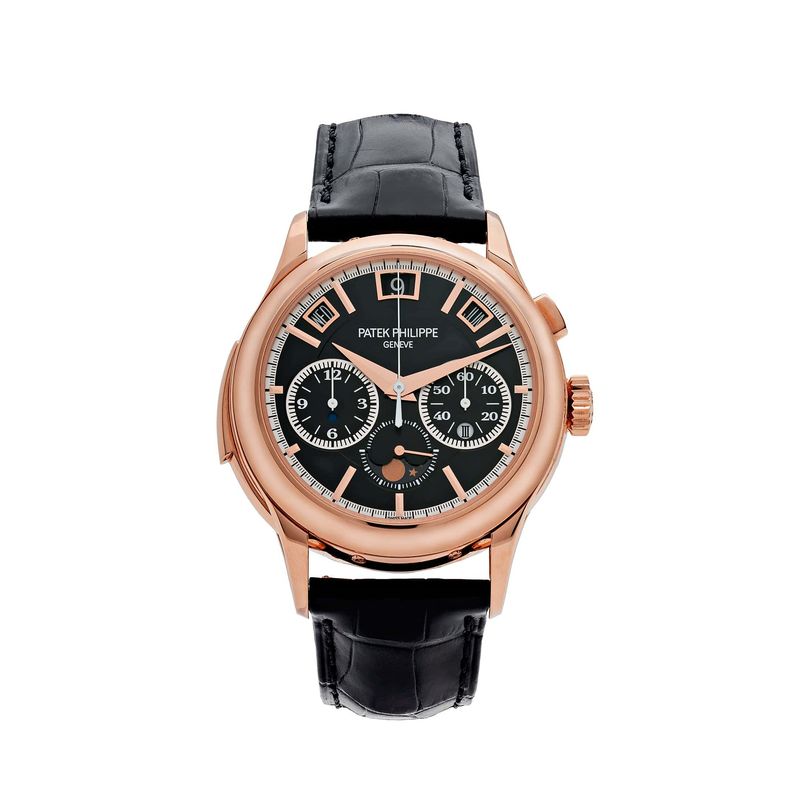
Rose gold was chosen for this reference for reasons beyond aesthetics. Gold alloys transmit sound better than platinum. The case walls in a minute repeater are intentionally thinner than in a standard watch — thinner walls vibrate more freely, projecting the gong strikes outward. This creates an engineering tension: thin enough for good sound, thick enough for structural integrity and water resistance. Patek’s solution involves carefully profiled case walls with variable thickness — thinner in the resonance zones, reinforced at stress points around the lugs and crown.
The repeater slide lever sits on the left side of the case at 9 o’clock. Pushing it downward winds a separate spring that powers the striking mechanism — the repeater has its own energy source independent of the mainspring. This means activating the repeater does not drain power from the timekeeping or calendar functions. The slide action should feel smooth with progressive resistance — a tactile feedback that experienced collectors use to assess the quality of a repeater mechanism.
The Monopusher Chronograph — Why One Button Changes Everything
Most modern chronographs use two pushers: one for start/stop and one for reset. The monopusher pre-dates this layout. In the early 20th century, chronographs used a single button — often integrated into the crown. The monopusher on the 5208R pays homage to that tradition while using modern column-wheel architecture for precision.
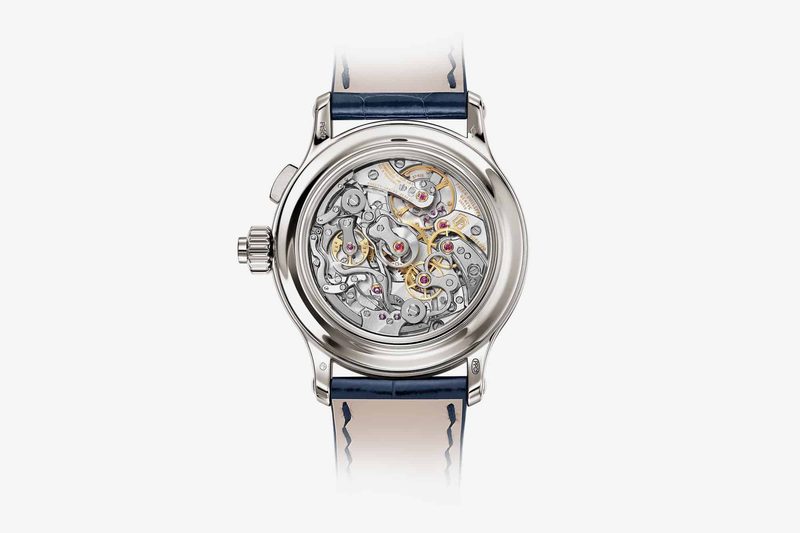
Insight: The 5208R combines three grand complications in a single movement — a feat only Patek Philippe has achieved in a wristwatch. Each piece requires over 900 hours of assembly.
The mechanical challenge of a monopusher lies in its state machine. One input must produce three different outputs in sequence: engage, disengage, reset. A column wheel with three distinct positions manages this sequencing. Press the pusher — the column wheel rotates to position one, engaging the chronograph gear train. Press again — position two, disengaging the gears while the hands freeze in place. Press a third time — position three, the heart-shaped cam resets the chronograph hands to zero. Each press rotates the column wheel 120 degrees.
The 30-minute counter at 12 o’clock records elapsed minutes while the central chronograph seconds hand sweeps continuously. A running seconds sub-dial at a lower position provides the ongoing seconds display independent of the chronograph. The monopusher feel should be firm and deliberate — a commitment to each action rather than the quick stab of a modern two-button chronograph. This deliberateness was part of the original design philosophy: the chronograph records, the user decides.
Insight: The monopusher introduces a limitation that two-pusher chronographs do not have: you cannot reset the chronograph without first stopping it. On a two-pusher layout, the reset button is physically separate, allowing for a flyback function. The monopusher trades that flexibility for mechanical elegance and a cleaner case profile — one fewer hole in the case means better acoustic performance for the minute repeater.
Instantaneous Perpetual Calendar — The Midnight Snap
The word “instantaneous” matters. Many perpetual calendars use a semi-instantaneous or dragging mechanism where the date display begins to move around 10 PM and completes the transition by 2 AM. During that four-hour window, the displays are in an intermediate position — not quite showing the previous date, not quite showing the next. This is mechanically simpler and requires less energy, but it creates an ambiguity window that some collectors find unacceptable.
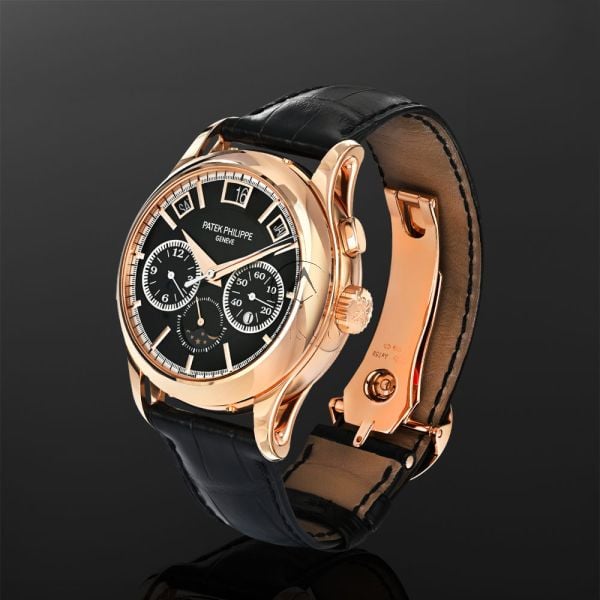
The 5208R’s perpetual calendar is instantaneous. At midnight — precisely — all calendar displays snap to the next position simultaneously. Day, date, month, moon phase. One instant. This requires a spring-loaded mechanism that accumulates energy throughout the day and releases it in a single burst at midnight. The engineering challenge is ensuring that burst is powerful enough to drive all displays but controlled enough to not damage the delicate gear trains.
The perpetual calendar program accounts for 30-day months, 31-day months, 28-day February, and the leap year’s 29-day February. The moon phase complication, integrated into the perpetual calendar module, tracks the 29.53-day lunar cycle with a deviation of one day every 122 years. The leap year cycle indicator shows the current position within the four-year cycle — essential information for a watchmaker servicing the piece and useful for the owner to verify the calendar is correctly programmed.
What Instantaneous Means
- All displays change at exactly midnight
- No ambiguity window around date change
- Spring-loaded mechanism stores energy
- Single burst release drives all displays
- Higher energy demand on movement
What Semi-Instantaneous Means
- Displays begin moving around 10 PM
- Transition completes by ~2 AM
- Four-hour ambiguity window
- Lower energy requirement
- Simpler, less expensive mechanism
The 5208R Among Grand Complications — How It Compares
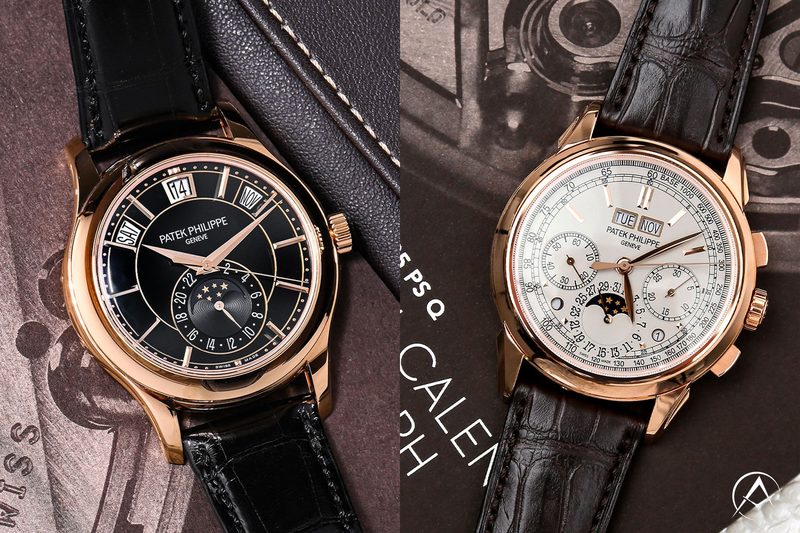
The 5208R exists in extremely rarefied company. Watches combining minute repeater, chronograph, and perpetual calendar can be counted on two hands across the entire Swiss watch industry. The Patek Philippe Grandmaster Chime exceeds it in complication count (20 vs. the 5208’s core trio), but the 6300 is an entirely different proposition — a 47.4mm reversible case designed as a showcase rather than a daily-wearing grand complication.
The 5208R is more focused. Three complications, each executed to the highest standard, in a case you can realistically wear to dinner. The Patek Philippe Sky Moon Tourbillon (5002/6002) adds celestial complications and a tourbillon but pushes the case to 44mm and the weight into territory that tests wrist endurance. The 5208R makes a different argument: not maximum complications, but the right complications, combined with maximum craftsmanship, in a wearable package.
The 5208R Replica — Expectations and Reality
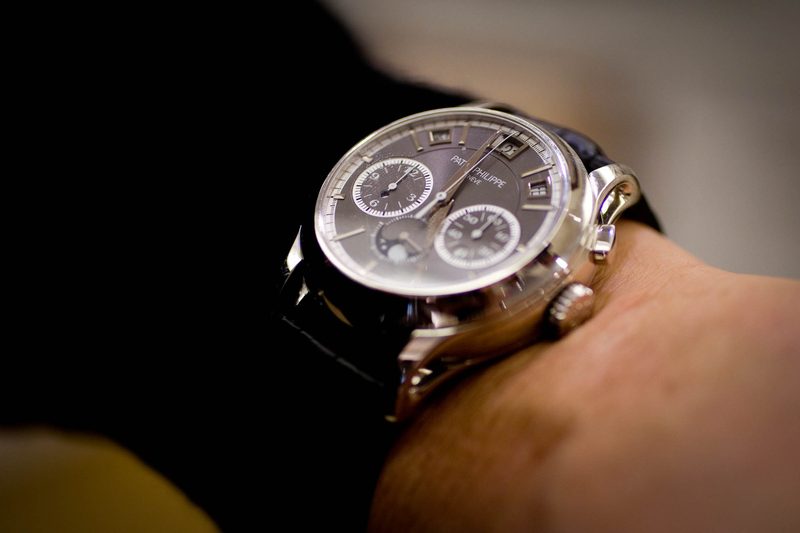
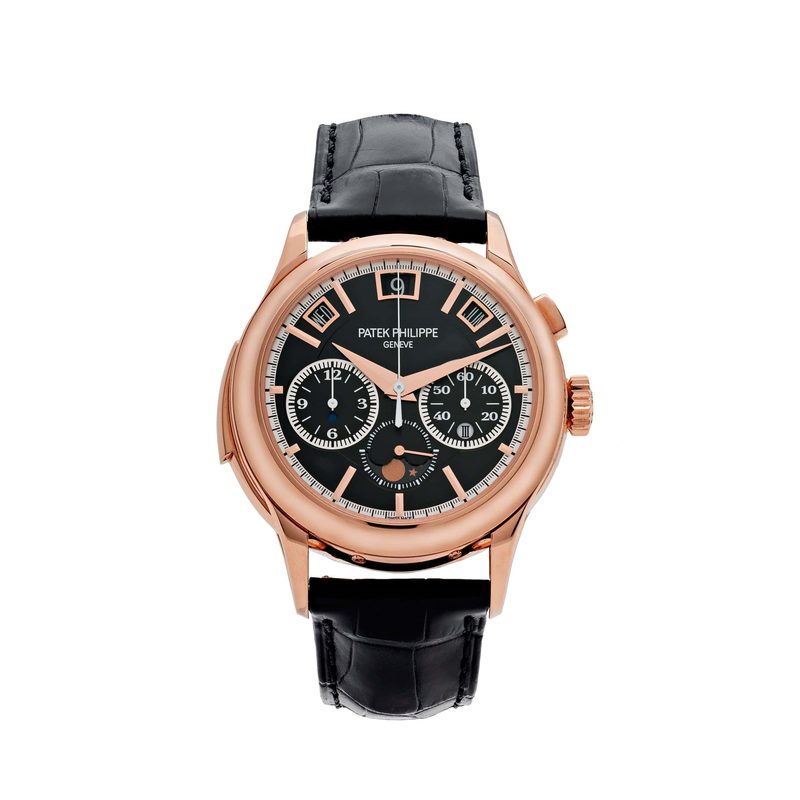
A Patek Philippe 5208R replica reproduces the visual architecture of the genuine piece: the 42mm rose gold case profile, the dial layout with its chronograph sub-dials and perpetual calendar displays, the monopusher at 4 o’clock, and the repeater slide lever at 9 o’clock. The case proportions — the relationship between lug-to-lug length, bezel width, and dial opening — are faithfully replicated in quality examples.
The chronograph function works. Press the monopusher and the seconds hand begins sweeping. Press again to stop. Press again to reset. The three-state column wheel mechanism in top-tier replicas operates with the correct start-stop-reset sequence. The 30-minute counter at 12 o’clock advances correctly during timing. The perpetual calendar displays function as an annual or simple calendar depending on the movement tier — the visual result is correct for most of the year.
The minute repeater requires honest assessment. The striking mechanism in a replica produces sound, but it does not match the acoustic quality of the genuine R TO 27 PS QI caliber. The cathedral gong tone, the precise intervals between strikes, the resonance through the case — these qualities take four years and a master watchmaker to achieve in the genuine piece. A replica repeater mechanism provides a mechanical chiming experience that is functional and fascinating, but acoustically modest by comparison.
Case finishing on better 5208R replicas shows genuine craft. The alternating brushed and polished surfaces, the concave lug profiles, and the repeater slide mechanism all demonstrate attention to the design language. The Patek Philippe Grandmaster Chime replica and the Sky Moon Tourbillon replica share this same tier of exterior quality, where the visual presentation meets the standard set by the genuine design.
Frequently Asked Questions
Why does the 5208R take four years to build?
The 700+ components must be individually manufactured, hand-finished (chamfered, polished, Geneva-striped), and assembled by a single master watchmaker. The minute repeater alone requires months of acoustic tuning and testing. The perpetual calendar and chronograph mechanisms each demand extensive regulation. Combined, these processes require a minimum of four years from component manufacturing to final casing and delivery.
What is a monopusher chronograph and how does it differ from a standard chronograph?
A monopusher uses a single button for all chronograph functions — start, stop, and reset — in a fixed sequence. A standard two-pusher chronograph separates start/stop from reset, allowing you to reset without first stopping (flyback function). The monopusher is mechanically more complex internally but simpler externally, with only one case penetration for the chronograph controls.
What makes the perpetual calendar “instantaneous”?
An instantaneous perpetual calendar changes all displays — day, date, month, and moon phase — in a single snap at exactly midnight. Standard perpetual calendars allow displays to gradually creep forward over several hours. The instantaneous mechanism uses a spring-loaded system that stores energy throughout the day and releases it in one burst, requiring more sophisticated engineering but providing a cleaner display at all times.
How does the minute repeater know what time to chime?
The repeater mechanism reads the current time from the movement’s gear train through a system of “racks” and “snails.” A snail-shaped cam connected to the hour wheel determines the number of hour strikes. Similar mechanisms read the quarter-hours and minutes. When the slide lever is activated, these racks drop onto the snails, measuring the distance — which translates directly into the number of strikes for each tone.
Does a 5208R replica have a working minute repeater?
Quality 5208R replicas include a functional repeater mechanism that produces audible chiming when the slide lever is activated. The mechanical striking action works — hammers hit gongs and produce sound. The acoustic quality differs from the genuine due to differences in gong material, case resonance tuning, and the precision of the striking mechanism. The visual and tactile experience of activating the slide lever is faithfully reproduced.
The Patek Philippe 5208R is watchmaking at its absolute ceiling. Three grand complications. Four years of human labor. Over 700 parts working in concert. It does not ask to be admired — it earns that response through mechanical substance that few watches on earth can match. In a world of increasingly digital timekeeping, the 5208R stands as proof that human hands can still create what algorithms cannot conceive. The sound of its minute repeater in a quiet room is not just telling the time. It is singing it.