


How to Buy Patek Philippe Replica Watches Without Getting Burned
Expert Guide • 7 Steps • Updated 2026
Quick Navigation
Before you fall in love with a reference number from a product photo, understand the buying process that actually protects your money. Once the watch is on your wrist, it is the movement hum, the bracelet weight, the snap of the clasp, and the smooth sweep of the second hand that you notice every single day. That is where a well-informed choice pays off. Let me show you exactly what to look for in a Patek Philippe superclone, step by step.
1
How to Buy a Patek replica — Start With the Collection
Most people start backwards. They research movements, obsess over caliber numbers, read forum threads about rotor engravings — then realize the watch they picked doesn’t fit their lifestyle. If you want to buy a PP reproduction that you’ll actually wear, start with the collection. Patek Philippe makes seven distinct families, and each one serves a different purpose on your wrist.
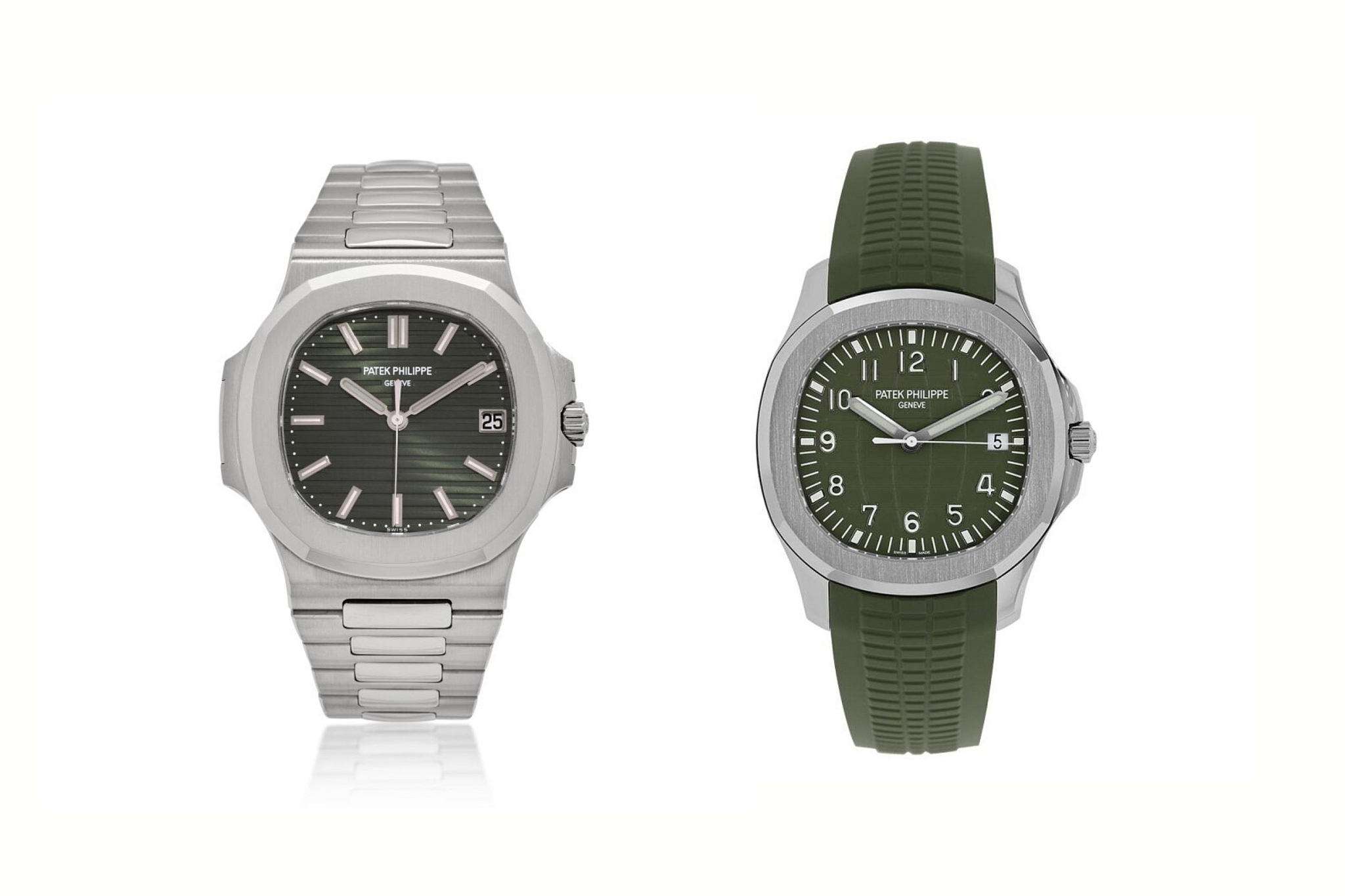
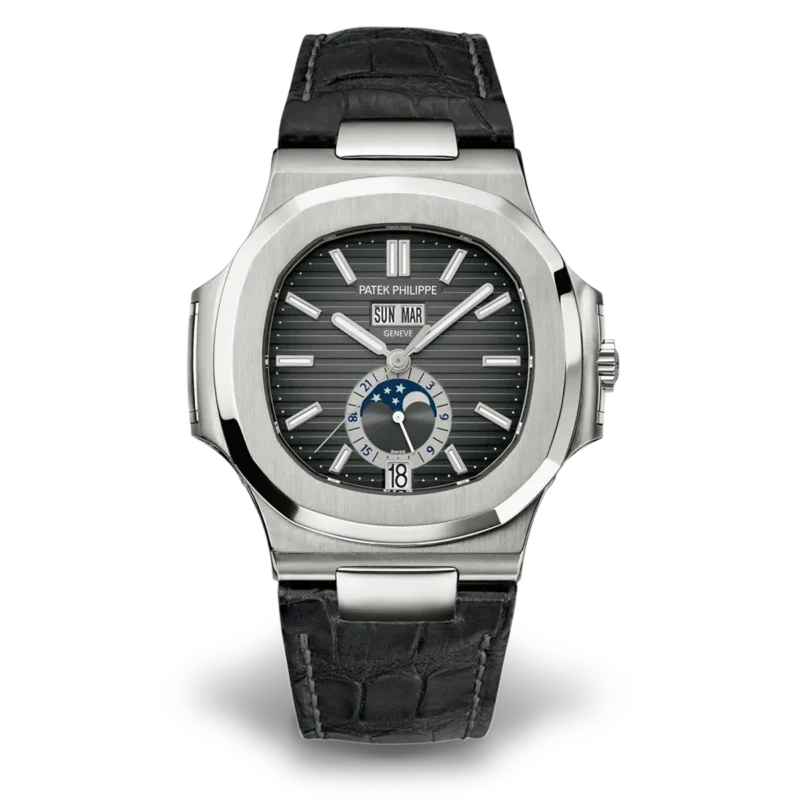
Nautilus is where most buyers land first. Gerald Genta’s 1976 design with that octagonal bezel and horizontal embossing on the dial — it goes with jeans, it goes with a suit, and it handles daily wear without complaint. Steel bracelet, 120m water resistance on the genuine, 30-50m on replicas. If you want one watch that covers everything, this is the default answer. Check our full Nautilus replica guide for reference breakdowns.
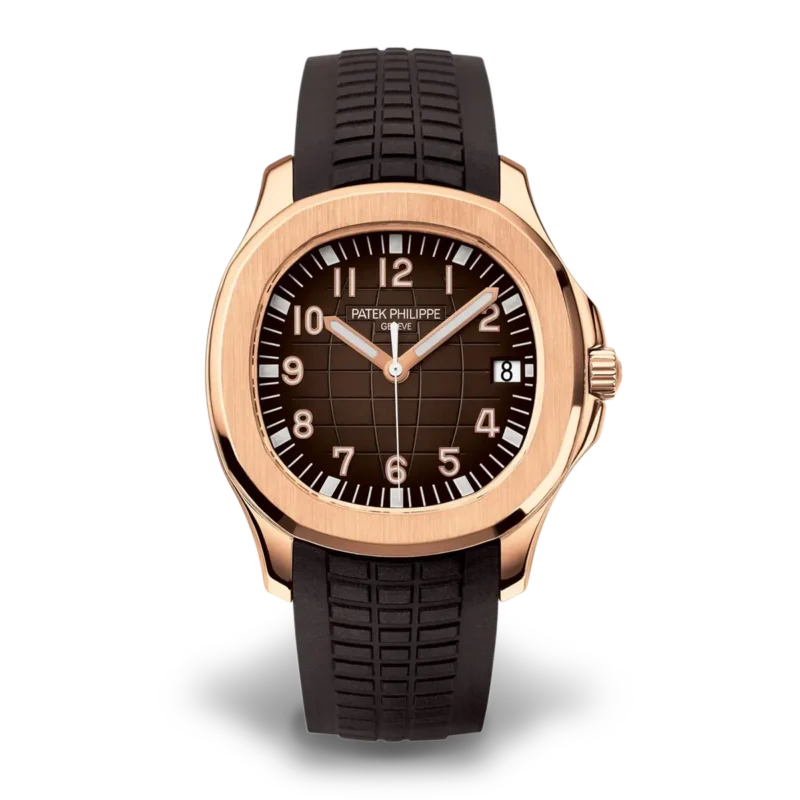
Aquanaut entered the lineup in 1997 as the sportier, younger alternative. Tropical rubber strap instead of steel. Rounded octagon instead of sharp edges. Lighter on the wrist by 30-40 grams. If you prefer rubber straps and a more casual look, start with the Aquanaut collection breakdown.
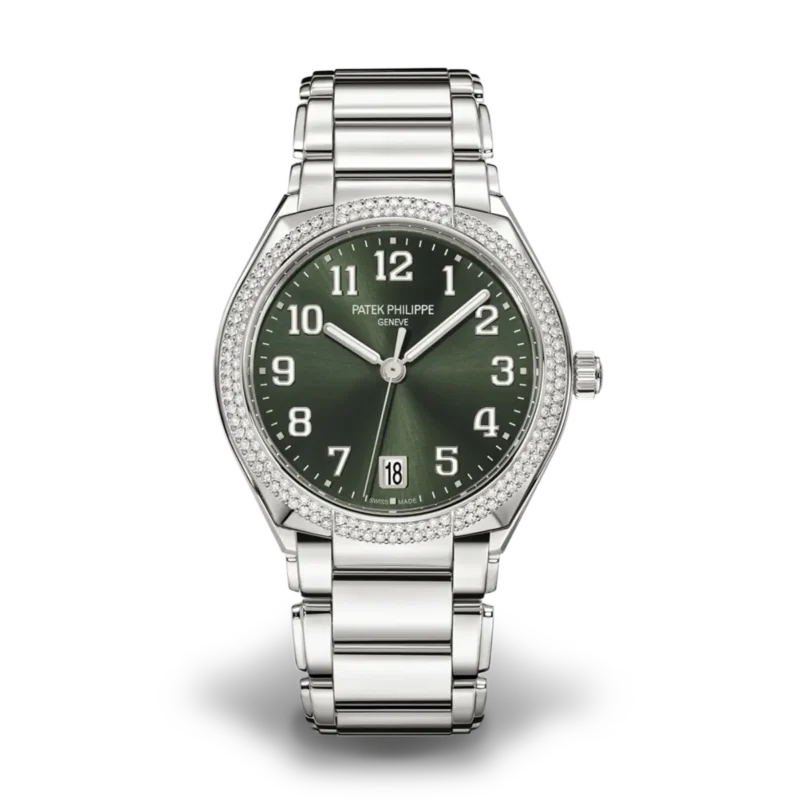
Calatrava is the dress watch — slim, round, clean dial. Stunning under a French cuff. But it disappears under a casual t-shirt and won’t survive a beach weekend. Complications and Grand Complications house the mechanical showpieces — annual calendars, world time dials, perpetual calendars, tourbillons. They demand attention and conversation. Cubitus is Patek’s newest family from 2024 — a bold 45mm cushion case that polarizes collectors. Twenty~4 covers the women’s line with smaller case sizes and diamond bezels.
Bottom line: If you buy a watch that doesn’t match how you actually dress, it stays in the box. Pick the collection first.
Once you’ve picked the collection, browse the Nautilus collection or whichever family caught your eye. Scroll through the references. Notice which dial colors pull you in. Blue sunburst? White? Green? That gut reaction matters more than any spec sheet.
2
Match the Watch to Your Wrist
A 45mm Cubitus on a 6-inch wrist looks like a wall clock strapped to your arm. A 33mm Calatrava on a 7.5-inch wrist disappears entirely. Getting the size right is the difference between a watch that looks intentional and one that looks borrowed.
Measure your wrist with a flexible tape measure — or a strip of paper wrapped snugly and measured flat. Here’s the breakdown that actually works:
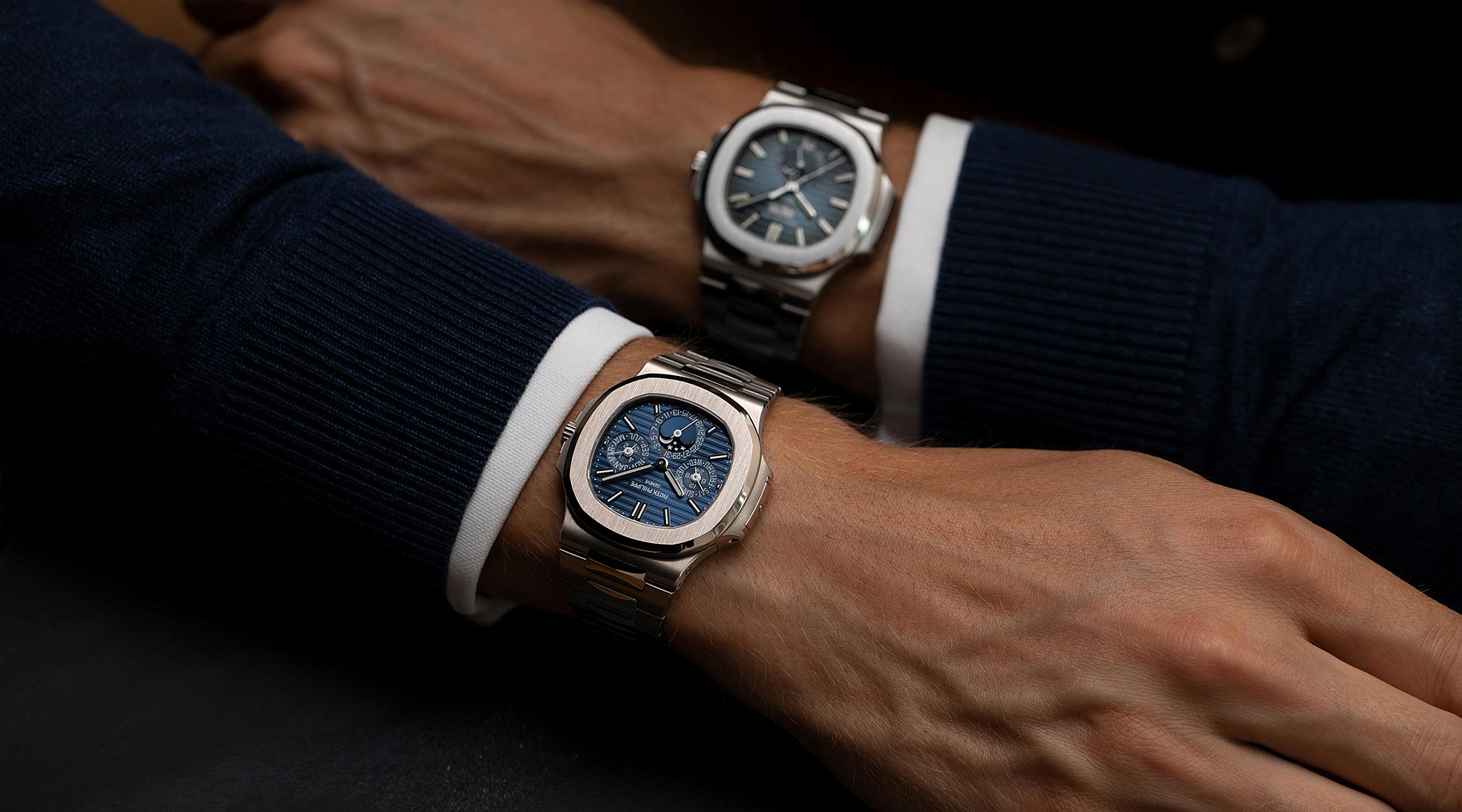
- Under 6.5 inches (16.5cm): Stick with 38–40mm. Aquanaut 5167A (40mm) or Calatrava 5227R (39mm) sit perfectly. The 5711 Nautilus at 40mm works too — the integrated bracelet hugs tighter than a standalone case.
- 6.5–7.5 inches (16.5–19cm): The sweet spot for Patek Philippe. Everything from 38mm to 42mm works. Nautilus 5811 at 41mm, Aquanaut 5168G at 42.2mm — both proportional.
- Over 7.5 inches (19cm+): You can handle 42–45mm without overhang. Cubitus at 45mm, Nautilus 5990 chronograph at 40.5mm with the pushers adding wrist presence, or an iced-out Nautilus with the diamond bezel adding visual mass.
Thickness matters as much as diameter. Calatrava sits at 8–9mm — slides under any cuff. Nautilus chronographs push 12–13mm — tight under dress shirts. If you wear suits daily, factor in case thickness before diameter.
Wrist Tip
When you buy a Replica timepiece with a steel bracelet, you’ll need to remove links for proper fit. Count on removing 2–4 links for most wrists. On rubber straps (Aquanaut), you cut to length — measure carefully because you can’t add material back.
3
Understand What You’re Actually Getting
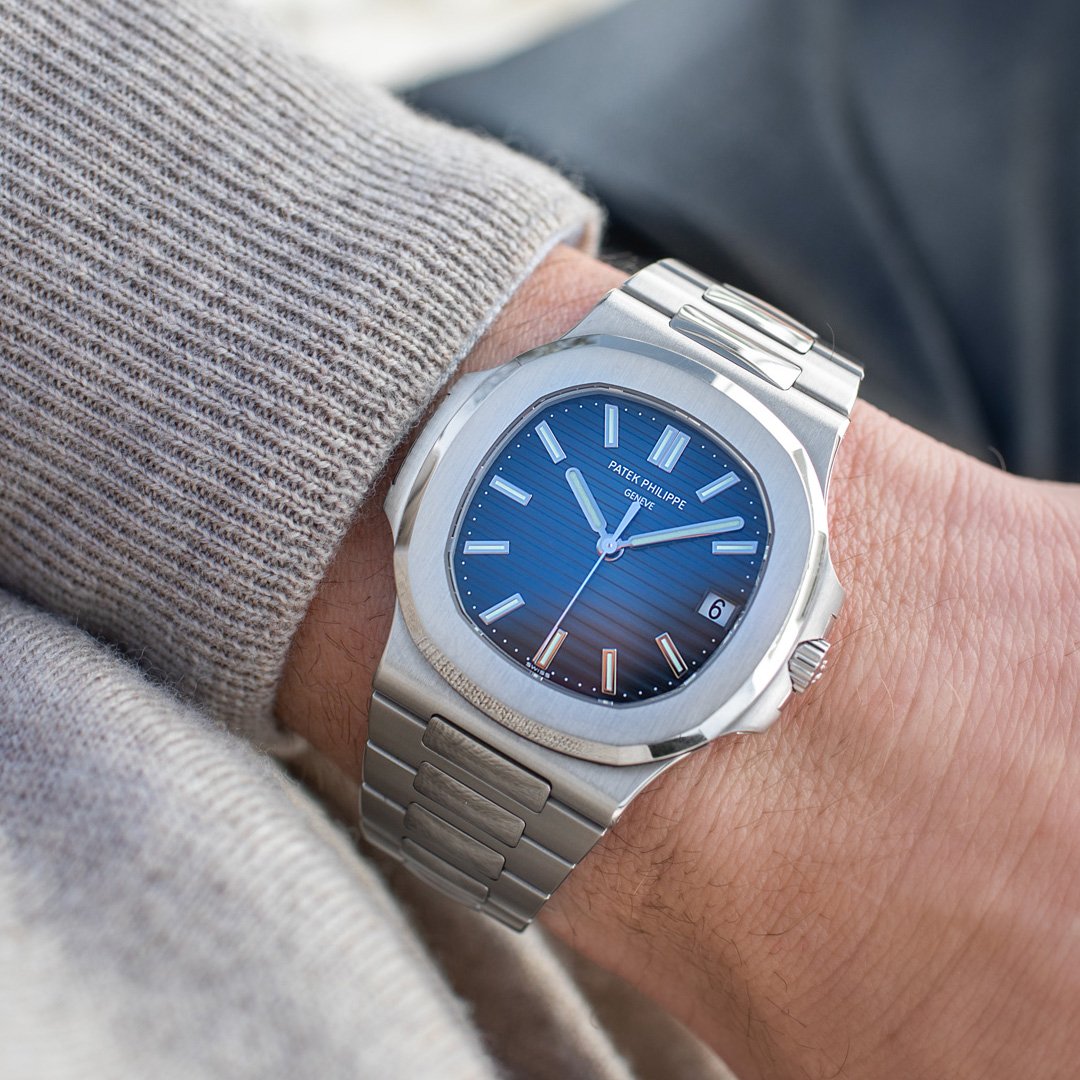
Here’s where first-time buyers get confused — and where five minutes of reading saves weeks of disappointment. Learning how to buy a Patek Philippe copy means understanding what you’re holding before it ships. Not every replica is built the same way. The difference between tiers shows up the second you hold the watch. Weight. Winding feel. How the clasp clicks. Whether the rotor spins smoothly or sounds like gravel in a tin can.
I won’t repeat the full tier breakdown here — our superclone quality tiers article covers every grade in detail. But the short version: you want a piece where the case has actual heft in your palm, where winding the crown feels like butter with consistent resistance, and where the second hand sweeps rather than ticks.
Three physical checks tell you more than any spec sheet:
01
Weight Test
Hold it in your closed fist. A well-built Nautilus 5711 replica weighs around 135–140 grams with bracelet. If it feels hollow or tinny — that tells you everything about the case construction inside.
02
Crown Action
Unscrew the crown. Wind it 20–30 turns. Good pieces have smooth, consistent resistance — like winding a genuine automatic. Bad pieces feel gritty, catch halfway, or have a loose wobble.
03
Clasp Click
The deployant clasp should snap shut with a firm, clean click — one motion, no wiggle. If you have to push twice or the clasp feels loose, the bracelet finishing isn’t where it should be.
These three checks take thirty seconds. They filter out 80% of problems before you even look at the dial.
Did You Know
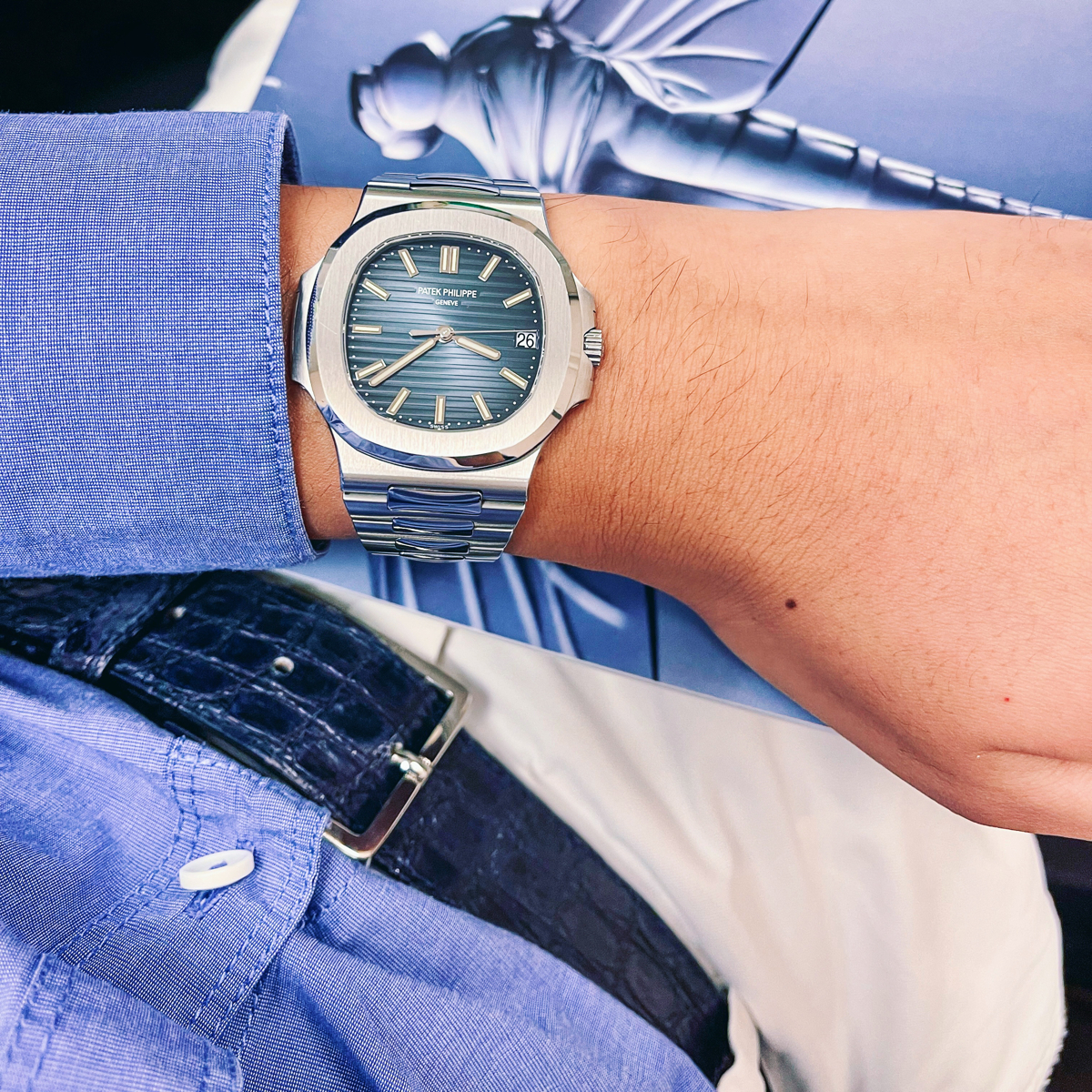
The Nautilus bracelet has a very specific satin-brushed finish on the flat center links with polished beveled edges on both sides. On flagship replicas, this alternating brush-polish pattern catches light the same way as the genuine — a quick wrist turn under sunlight reveals the quality instantly. Entry-level builds use uniform brushing without polished edges, and the difference is visible at arm’s length.
4
How to Buy a Replica PP You Won’t Regret — Read the QC Photos
Ask anyone who knows how to buy a A Patek reproduction what their number one rule is — they’ll say QC photos. Before your watch ships, you receive 8–12 quality control photos showing the actual piece assembled and running. Your job: go through each photo with specific checks and decide — green light (GL) to ship, or red light (RL) to request a different unit.
Most buyers glance at the photos, think “looks good,” and approve. That’s a mistake. Here’s exactly what to examine on each shot:
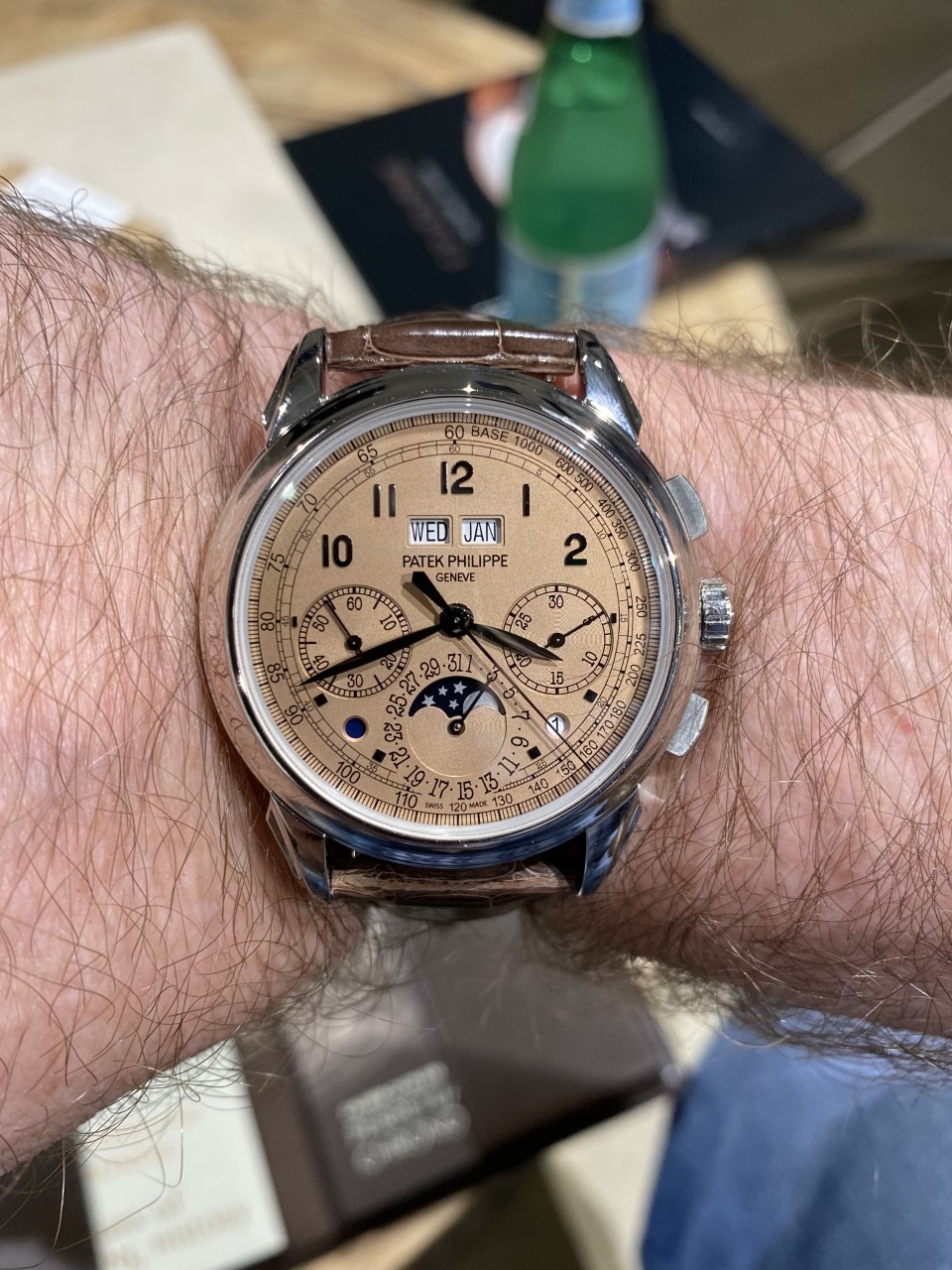
The dial alignment check catches the most problems. On a white or silver dial, even half a millimeter of misalignment between the 12 o’clock marker and the date window jumps out. On a dark blue Nautilus dial, the horizontal embossing helps hide tiny misalignments — but check the Patek Philippe Calatrava cross logo at 6 o’clock. If it’s not perfectly centered between the two nearest markers, ask for a swap.
GL/RL Rule
Don’t RL for cosmetic perfection — no watch, genuine or replica, is flawless under a macro lens. RL for issues visible at arm’s length: crooked markers, uneven gaps, dead lume spots. If you need a loupe to see the problem, it’s a GL.
5
Timegrapher Numbers — What They Actually Mean
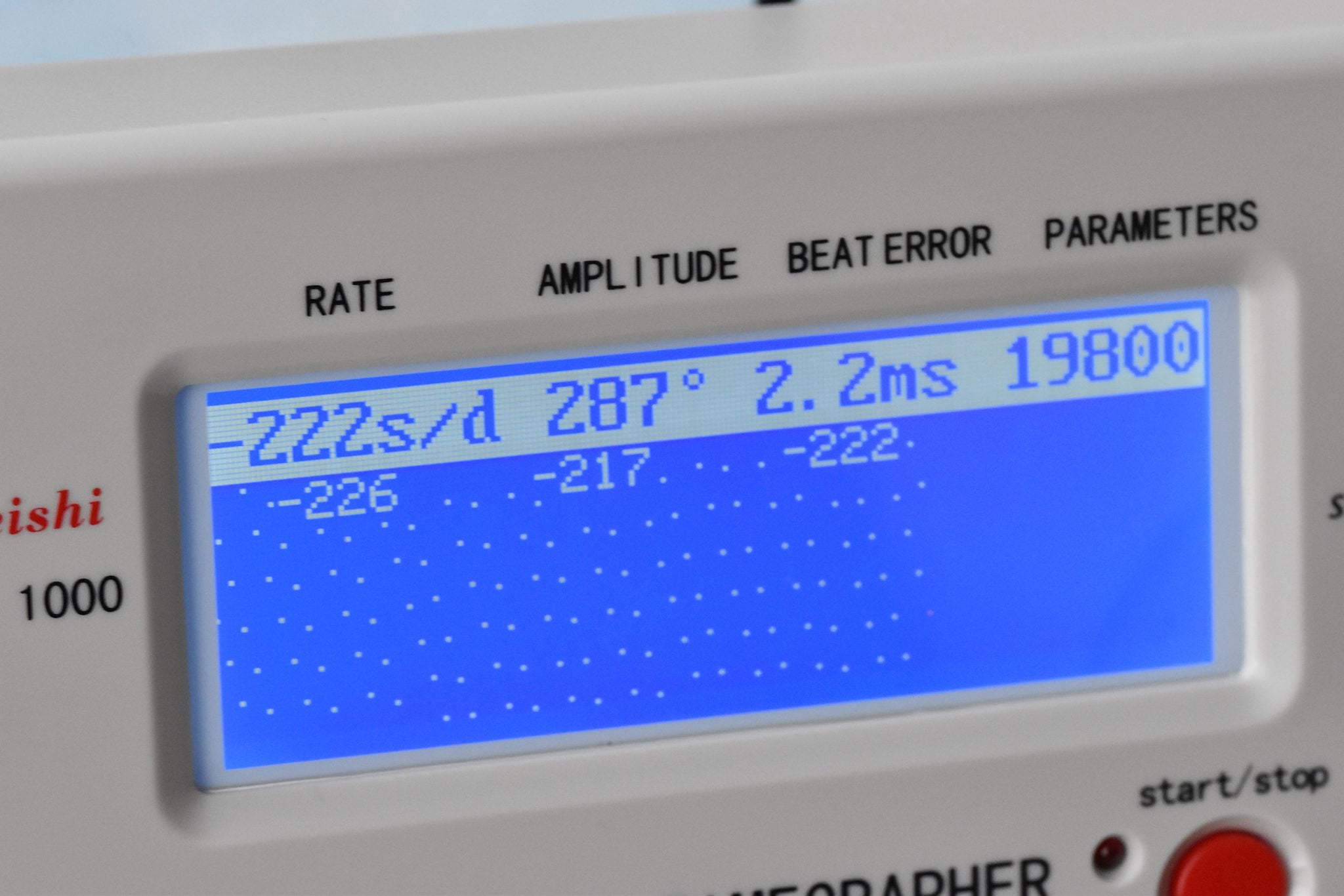
Every set of QC photos should include a timegrapher reading — a small device that listens to the movement’s tick and measures three values. Most buyers see these numbers, nod, and move on because they look like medical readouts. Here’s the cheat sheet:
Amplitude is the most important number. Think of it as a heartbeat — strong amplitude means the movement is running with proper energy. Below 240° and the watch will lose time irregularly. A reading between 270–310° means the movement was assembled cleanly and the mainspring is healthy.
Beat error measures whether the balance wheel swings evenly in both directions. Anything under 0.3ms is excellent. Between 0.3–0.8ms is fine for daily wear. Above 1.0ms and the hairspring needs adjustment — a watchmaker fixes this in fifteen minutes, but you shouldn’t have to do it on arrival.
Daily rate? Honestly, less important than the other two. A watch running +15 seconds/day out of the box gets regulated to ±5 seconds by a watchmaker in one sitting. But amplitude and beat error point to structural issues that regulation can’t fix. For a deeper look at what’s inside your watch, see our clone movement calibers breakdown.
6
Your Watch Arrived — The First 30 Days
The package shows up. Plain box, no branding on the outside. You open it. The watch is sitting in a cushion, crown sticker still on, plastic wrap on the bracelet. Here’s exactly what to do next — in order.
Day 1
Inspect in Hand
Remove all stickers. Check weight — does it feel solid, not hollow? Wind the crown 30 turns. Set the time. Check that the second hand sweeps smoothly, no stuttering.
Day 2–3
Track Accuracy
Set to your phone’s clock, check again in 24 hours. Note how many seconds gained or lost. Do this for three consecutive days to get an average.
Week 1
Size the Bracelet
For steel bracelets — remove links with a spring bar tool. For rubber straps — measure twice, cut once. The watch should sit snug but not tight. You should be able to slide one finger underneath.
Week 2
Visit a Watchmaker
Two things: pressure test the gaskets for water resistance, and regulate the movement on a timegrapher. Together this takes 30 minutes and makes your watch significantly more reliable for years.
Week 3–4
Live With It
Notice how it wears. Does it catch on sleeves? Is the clasp secure? Does the power reserve hold through the night? These observations tell you whether this collection and size are right for your lifestyle.
Ongoing
Monthly Cleaning
Warm water, soft toothbrush, 30 seconds between bracelet links. Dry fully. This removes the grey film from skin oils and makes even a good watch look neglected.
Warning
Do NOT submerge the watch before a pressure test. Gaskets can shift during international shipping. A pressure test at any watchmaker confirms whether your seals are intact. Skip this step and a single hand wash can fog the crystal from inside.
7
Three Mistakes That Cost First-Time Buyers
After watching people buy replicas for years, the same three errors show up over and over. If you remember nothing else from this guide, remember these — every single one is avoidable.
Mistake #1
Choosing by Photo Instead of Size
A 44mm Nautilus 5726 annual calendar looks stunning in product photos. Every detail pops. But on a 6.2-inch wrist it overpowers everything else you’re wearing. The lugs extend past your wrist edges. Photos don’t convey scale — your wrist circumference and the case dimensions do. Always check diameter AND lug-to-lug AND thickness before falling in love with a reference number.
Mistake #2
Skipping QC Photos
Some buyers approve immediately because they’re excited. “Just send it.” That excitement fades when a misaligned dial or a sloppy date window arrives at your door. The QC process exists specifically to protect you. Every GL or RL decision takes five minutes. Five minutes versus living with a flaw every time you check the time.
Mistake #3
Expecting a Genuine at Replica Pricing
A genuine Nautilus 5711 carries a Patek Philippe Geneva seal, is hand-assembled by a single watchmaker over weeks, and uses an in-house caliber 26-330 SC with a Gyromax balance wheel. A replica captures the design, the weight, the wrist presence, and the movement architecture — but it’s not the same product. Under a jeweler’s loupe, finishing differences exist. The people who enjoy their replicas the most are the ones who appreciate what they get.
?
Frequently Asked Questions
The Short Version
Knowing how to buy a Patek replica isn’t complicated — it’s just specific. Pick the right collection for your lifestyle. Match the case to your wrist, not to a photo. Read your QC photos with a checklist, not with excitement. Check the timegrapher numbers. Visit a watchmaker within two weeks of arrival. And manage your expectations — you’re buying an engineered reproduction that delivers 95% of the genuine wrist experience. That remaining 5% is what genuine owners paid fifty to a hundred times more for.
The people who get the most out of this hobby are the ones who treat the process seriously. Five minutes of QC review. One watchmaker visit. And a realistic understanding of what you’re holding. Do those three things and your first piece will still be on your wrist years from now.
Ready to start? Browse our collections — Nautilus for the all-rounder, Aquanaut for sport, Calatrava for dress, or Cubitus for bold geometry. Every piece ships with full QC photos and timegrapher data on request.